If you've been planning a European trip and someone mentioned ETIAS, you probably did what most people do: assumed it was just another bureaucratic headache, made a mental note to deal with it later, and moved on. That's understandable. But with the system now confirmed to launch in the last quarter of 2026, "later" is becoming "soon," and the details are worth actually understanding before your flight is booked.
Here's the thing—ETIAS is not as complicated as it might seem. It's not a visa. It doesn't require an embassy appointment, a stack of documents, or weeks of waiting. For most travelers, the whole process will take about ten minutes online and cost €20. But the fact that it's simple doesn't mean it's optional, and the confusion around when exactly it kicks in, who it applies to, and what happens during the transition period is real and worth clearing up properly.
This guide covers all of it—the timeline, the application, the exemptions, the grace period, and a few practical things that most articles gloss over.
What ETIAS Actually Is (And What It Isn't)
ETIAS stands for the European Travel Information and Authorisation System. The name sounds imposing, but the concept isn't new—the US has had a nearly identical system for years. It's called ESTA, and American travelers apply for it online before visiting the country. Australia has one too. Canada. The UK launched its version (ETA) in 2024.
Europe is essentially catching up.
ETIAS is a pre-travel clearance, not a visa. It's designed to enhance security by screening travelers before they arrive and streamline border control across 30 European countries. Your approval gets linked digitally to your passport. When you travel, airlines and border authorities can verify it automatically. You're not carrying a sticker or a stamp—it's all electronic.
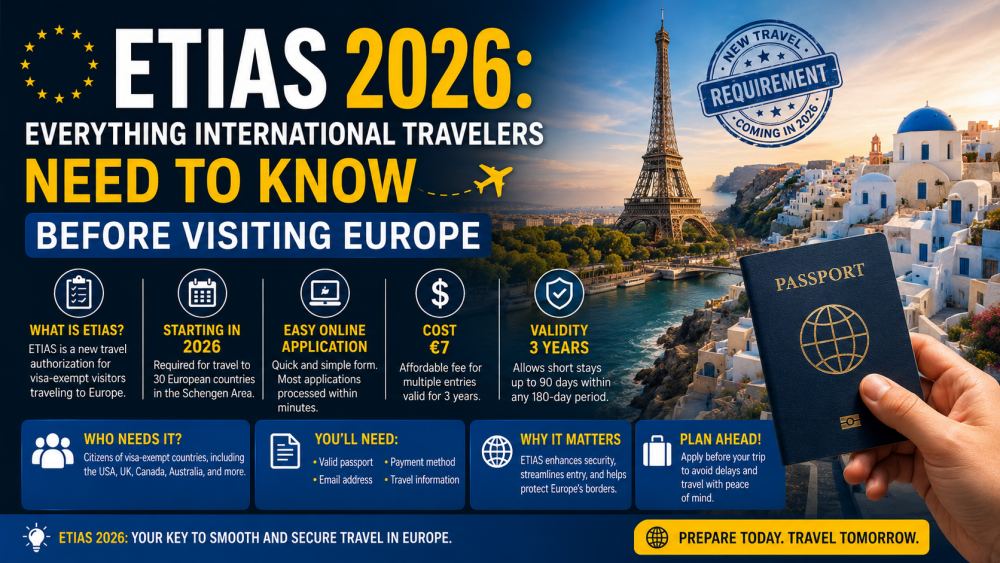
Once approved, your ETIAS travel authorization will be valid for three years or until your passport expires, whichever comes first, and allows multiple short-term stays of up to 90 days within any 180-day period. So if you travel to Europe regularly, you apply once and you're covered for three years across multiple trips.
The EU has been developing this system since 2016. Regulation (EU) 2018/1240 entered into force in October 2018, establishing the legal framework. The operational launch has been delayed multiple times since then. Originally planned for 2020, it was pushed to 2022, then 2023, then 2024, then 2025. Understandably, some travelers developed a kind of "I'll believe it when I see it" attitude about the whole thing. But the situation has genuinely changed.
The Timeline: What's Actually Confirmed for 2026
ETIAS is expected to launch in the last quarter of 2026, following the full EES rollout in April 2026. That's October, November, or December 2026—the EU hasn't pinned down a specific date yet and has said it will announce one several months before launch.
To understand why EES matters here: the Entry/Exit System (EES) and ETIAS work in tandem. EES records entry and exit timestamps at borders, while ETIAS determines eligibility before arrival. The EU treated ETIAS as the next step after EES was in place, which is why the timelines are linked.
As of June 2026, ETIAS is not yet in effect, and no applications are being accepted. The application portal has not opened. Any website currently accepting ETIAS applications is fraudulent. This is worth repeating loudly because scam sites have been around for years charging people for "ETIAS applications" that don't exist yet. If you see a site asking for your money right now, close the tab.
The official portal, when it opens, will be at the EU's travel-europe.europa.eu site or the dedicated ETIAS mobile app.
The Grace Period Explained (This Part Matters)
Here's where it gets a little nuanced and where a lot of travelers get confused.
ETIAS won't be mandatory for travelers until approximately April 2027, after a six-month transitional period. So the system launches in Q4 2026, but there's a built-in adjustment window before enforcement gets strict.
During the grace period—the six months after the transitional period—all first-time arrivals to Europe since the end of the transitional period will be allowed to enter without an ETIAS travel authorization, subject to satisfying all other entry requirements. All other travelers will need to have an ETIAS travel authorization to enter.
What this means practically: if you've traveled to Europe after the system launches but before ETIAS went mandatory, you might be waved through on your next trip even without one, at least for a while. But this gets complicated fast—border officers still have discretion, airlines may refuse boarding before the plane even leaves, and banking on a grace period provision is not a travel strategy anyone should rely on.
The safe, sensible approach: apply as soon as the portal opens. It's cheap, it's fast for most people, and having it means you never have to think about this again for three years.
Who Needs ETIAS (And Who Doesn't)
Travelers from 59 visa-exempt countries—including the United States, Canada, and the United Kingdom—must apply for ETIAS before entering most European countries. Other major nationalities that will need it include Australians, New Zealanders, Japanese, South Koreans, Brazilians, and most Latin American passport holders who currently enjoy visa-free access to Europe.
The 30 European countries requiring ETIAS are Austria, Belgium, Bulgaria, Croatia, Cyprus, Czech Republic, Denmark, Estonia, Finland, France, Germany, Greece, Hungary, Iceland, Italy, Latvia, Liechtenstein, Lithuania, Luxembourg, Malta, Netherlands, Norway, Poland, Portugal, Romania, Slovakia, Slovenia, Spain, Sweden, and Switzerland.
Notice that the list includes some countries that aren't in the EU (like Norway and Switzerland) and excludes some that are (like Ireland). This trips people up. ETIAS covers the Schengen Area plus a few additional countries—it's not perfectly coextensive with EU membership.
Who is exempt from ETIAS:
EU and Schengen Area citizens don't need it—that's obvious. But beyond that, diplomats, civil servants, and family members of EU nationals under specific legal frameworks may also be exempt. If you hold a diplomatic, service, or special passport and are traveling under an agreement between your country and the EU, you are typically exempt.
Recognized refugees and stateless persons residing in an ETIAS-requiring country are also exempt, as are those traveling solely within the terms of a local border traffic permit and those who remain in the international transit area of a European airport without entering the country.
Children under 18 and people 70 years old or older at the time of submitting their application are exempt from the fee—though they still need the authorization itself.
One important clarification: if you need a Schengen visa to enter Europe (because your country isn't on the visa-exempt list), ETIAS doesn't apply to you. You continue using the visa process as before. ETIAS is specifically for people who currently travel visa-free.
How the Application Process Will Work
The application isn't open yet, but the process has been clearly outlined, and it's genuinely straightforward.
The ETIAS collects personal information, passport details, and travel history before granting approval. You'll also answer a short series of background questions—things like whether you have a criminal record, whether you've been refused entry to any country, or whether you have certain health conditions. These aren't trick questions; they're standard pre-travel screening checks similar to what ESTA asks.
The application process is fully digital. Once live, applications can be submitted via the official ETIAS website or the mobile app.
Most applications will be processed within minutes. However, in some cases—such as when additional checks are required—it may take up to 96 hours or, in rare cases, up to 30 days. If requested, you may need to submit more information or attend an interview with national authorities. You will be notified of the result via email.
The fee is €20, up from the previously stated €7, reflecting operational costs, system functionalities, and inflation. At roughly $22 USD or £16 GBP, it's not going to break anyone's travel budget.
One thing to be aware of: you must get approval before boarding your flight, train, or cruise—not at the border. Airlines will be required to check ETIAS status before departure, just like they currently check passport validity. Showing up at the airport without it won't end well.
Practical Scenarios: What This Looks Like in Real Life
Picture a family of four from the US—two parents in their forties, a 16-year-old, and a 10-year-old—planning a two-week trip to Italy and France in late 2027. By that point, ETIAS will be fully mandatory. Here's what they actually need to do: the two parents each apply separately, paying €20 each (€40 total). The two children, both under 18, are exempt from the fee but still need their own ETIAS authorizations. So four applications, two of them free, all processed online in minutes. If their passports are valid for the duration of the trip, they're set for the next three years of European travel with no further action needed.
Compare that to applying for a traditional Schengen visa, which requires gathering bank statements, travel insurance documents, hotel bookings, and sometimes attending an in-person appointment. ETIAS, for most travelers, is genuinely a non-event—a ten-minute online form that you do once and largely forget about.
Now picture a solo traveler from Canada who books a last-minute Eurostar from London to Paris in November 2026—right as the system goes live. If they haven't applied yet and the application portal is open, they need to sort it before boarding. If the system just launched and they're traveling during the transitional window, they might technically be fine without it—but they'd be gambling on grace period provisions when applying takes ten minutes and €20. Not a gamble worth taking.
ETIAS and the EES: Two Systems, One Border Experience
You might also see the acronym EES popping up alongside ETIAS, and it's worth understanding how they differ.
The EU announced a Travel to Europe mobile application, which allows non-EU nationals to pre-register their passport data and facial image and provide various details about their trip within the 72 hours before reaching an EES border crossing point.
EES is the Entry/Exit System—it records when non-EU nationals enter and exit the Schengen Area, replacing the old passport stamp system. It's what tracks whether travelers are respecting the 90/180-day rule. ETIAS is the pre-authorization system—it screens you before you travel.
Think of it this way: EES is the logbook that records your visits; ETIAS is the permission slip you need before the visit starts. They're separate systems serving different functions, but they're designed to work together as part of the EU's broader border modernization program.
For most tourists, this distinction matters mainly for understanding what you're applying for. ETIAS is the one you'll actively need to do. EES happens automatically at the border.
What Can Go Wrong: Denial, Appeals, and Complications
The vast majority of ETIAS applications will be approved automatically within minutes. But not every application will be smooth.
Another common myth is that approval guarantees entry. In reality, border officers retain final discretion even with valid ETIAS. An approved ETIAS means you've passed the automated screening; it doesn't mean a border officer can't still deny entry if something raises a flag at the checkpoint.
If your application is denied, there is an appeals process—but it varies by member state, since national authorities handle manual reviews. If you have anything in your background that could complicate the application—previous entry refusals, certain criminal convictions, or complex travel history—it's worth consulting an immigration advisor before applying rather than being surprised by a denial close to your travel date.
If you have criminal convictions or previous visa refusals, consult an immigration advisor about your eligibility before applying. This is genuinely useful advice rather than just legal boilerplate.
What to Do Right Now
Since the application portal isn't open yet, there's no action required today. But there are a few sensible things to do in the meantime.
Check your passport expiry date. Ensure your passport is valid and won't expire within three years if you're a frequent Europe traveler—your ETIAS is linked to your passport, and if your passport expires before the three-year ETIAS validity, you'll need a new ETIAS when you renew your passport.
Watch for the official announcement. The EU has committed to announcing the specific launch date several months in advance. When that happens, apply early. Early applicants face no risk of delays, and it removes one more thing from the pre-trip to-do list.
Be skeptical of any website currently offering to submit an ETIAS application. None of them are legitimate—the system isn't operational yet.
The Bigger Picture
It's tempting to frame ETIAS as Europe "tightening up" its borders, but that's not really what this is. The UK, Australia, Canada, and the US have all had equivalent systems for years. Europe has been, until now, one of the few major tourist destinations in the world where tens of millions of international visitors could arrive with no prior registration at all. That era is ending—but what's replacing it is a ten-minute online form, not a visa application.
For frequent travelers, the three-year validity makes this even less of a burden than it first appears. Americans who visit Europe every summer will apply once and not think about it again until their passport or ETIAS expires.
The more relevant practical concern right now is timing. The Q4 2026 launch is confirmed, the fee is set at €20, and the grace period means strict enforcement likely won't kick in until mid-2027. But counting on grace periods is always a risk—airlines will check ETIAS status before boarding from the moment the system goes live, regardless of transitional provisions.
The smart move, as always with travel admin, is to handle it early and move on. When the portal opens, apply, and then get back to actually planning the trip—which is the part worth spending your energy on.