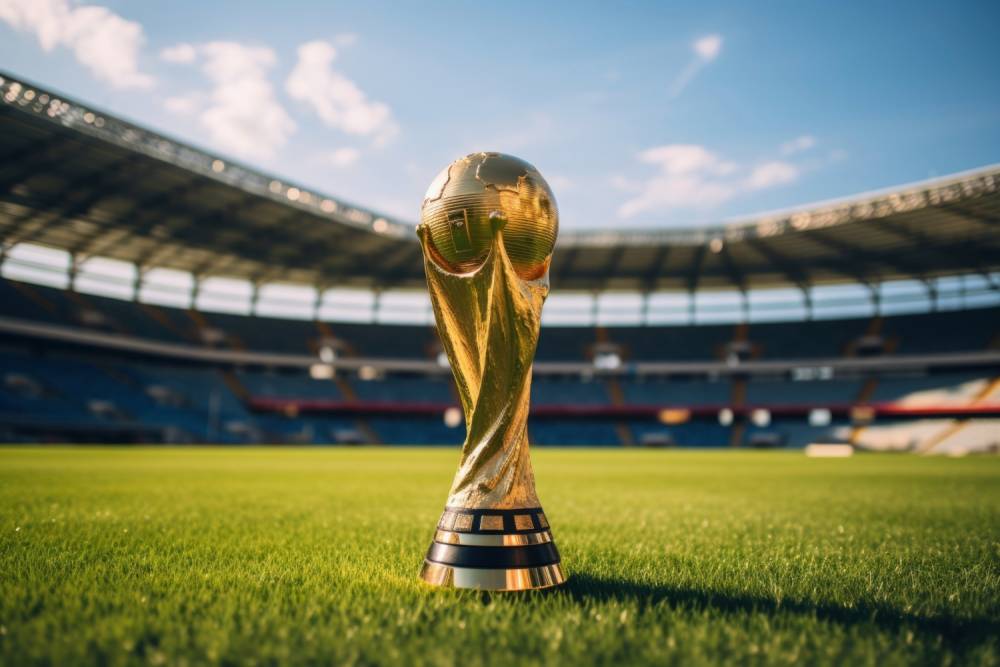
Every World Cup has one. That one team nobody really talked about before the tournament that somehow keeps winning, keeps grinding, and keeps making people nervous. Morocco did it in Qatar. Croatia did it in Russia. Uruguay did it back in South Africa. And in 2026, with 48 teams spread across the United States, Canada, and Mexico, the expanded format almost guarantees that at least one, maybe two, genuinely unexpected teams will go on a run that nobody predicted.
Think about it this way. With 48 teams now competing and 32 of them advancing to the knockout round, the group stage is more forgiving than ever. A well-organized side with a bit of quality and a lot of spirit can sneak through without needing to beat a heavyweight outright. Then, once you are in the knockouts, anything goes.
So who are the World Cup 2026 dark horse teams worth keeping a close eye on? Not just teams that have one good player, but sides with a real structure, a clear identity, and reasons to believe they can cause genuine problems for the big names. Below are the teams that deserve your attention, and a few of them might just end up being the story of the whole tournament.
Why the 2026 Format Is Perfect for Underdogs
Before we get into specific teams, it's worth spending a moment on why this particular World Cup sets up so well for surprise teams. FIFA 2026 is not just bigger; it is structurally more accommodating for nations that might lack the absolute ceiling of a Brazil or France but have enough consistency and tactical discipline to navigate a group.
In the old 32-team format, you needed to finish in the top two of your group to advance. Miss that and you are going home. Now, four of the best third-placed teams from the 12 groups also go through. That's a significant cushion. A team that loses a tight opener against a powerhouse, draws the second game, and then wins the third can still go through. That changes how coaches approach tournaments, and it changes what's possible for smaller nations.
Add in the fact that three different countries are hosting, which spreads the home advantage and means no single venue environment dominates, and you have a tournament that genuinely rewards adaptability. The underdog FIFA World Cup 2026 narrative is not just wishful thinking. It is structurally supported by the format itself.
Norway: Haaland and Odegaard at Their First World Cup
The Big Picture
Norway are not exactly an unknown team, but calling them a dark horse feels right given that they have not been at a World Cup since 1998. That is 28 years in the wilderness. An entire generation of Norwegian football fans has grown up without seeing their country at the biggest stage. And now, somehow, Norway returns with arguably the two best players in the world at their respective positions.
Erling Haaland scored 27 goals in the 2025/26 Premier League season alone. Martin Odegaard is the creative heartbeat of Arsenal and one of the most complete midfielders in European football. The idea that Norway is a dark horse tells you everything about how overlooked this team has been.
The Qualifying Campaign
Norway and England were the only two European teams to record perfect qualifying campaigns. Norway won all eight of their matches and led the entire European qualifying round in goals scored, netting 37 times at an average of 4.62 goals per game. They beat Italy, scored four or more in most of their other fixtures, and gave essentially nothing away defensively.
Behind Haaland, Alexander Sorloth contributed 20 goals across all competitions for Atletico Madrid last season. Julian Ryerson was one of the most creative full-backs in the Bundesliga. Sander Berge anchors the midfield with physicality and reading of the game. This is not a one-man show.
The Challenge
Norway was drawn into Group I alongside France, Senegal, and Iraq. That is genuinely brutal, and it is why Norway is still considered an underdog World Cup 2026 pick rather than a straightforward favorite. Getting out of that group will require a performance of the highest order. But if they do, they could be a problem for absolutely anyone in the knockouts. The appetite to succeed is enormous. Haaland has won everything at club level. The World Cup is the one thing missing, and that kind of motivation is hard to quantify.
Japan: The Most Technically Polished Dark Horse in the Tournament
Recent Form Says It All
Japan was the first non-host team to qualify for the 2026 World Cup. That tells you something about how consistently strong they have been. More impressive are the results they have produced in friendlies since the 2022 tournament: wins over Germany, Brazil, England, and Spain. Those are not minor scalps. Those are wins over four of the top five teams in world football.
The 1-0 win over England at Wembley in March, courtesy of a Kaoru Mitoma goal, was a quiet statement. England had barely lost under Thomas Tuchel. Japan came to their ground and beat them with a performance built on pressing precision and tactical discipline. It was not a fluke.
What Makes Japan Different
Japan operates what analysts describe as the cleanest pressing system at this tournament. Their blocks are timed to the second. Their transitions from defense to attack are almost mechanical in their efficiency, and their players are increasingly based at top European clubs rather than in the domestic J-League. This is a squad with genuine exposure to high-level football week in, week out.
In Group F alongside the Netherlands, Sweden, and Tunisia, Japan has a realistic path to the knockout round. The Netherlands is strong but beatable. Sweden will compete. Tunisia can be handled. Japan's pressing system is designed to disrupt teams that like to build from the back, and both the Netherlands and Sweden prefer exactly that.
The One Cloud
Key forward Kaoru Mitoma has been carrying an injury concern. His availability at full fitness will significantly shape how dangerous Japan look going forward. If he is not fully fit, the pressure on the attack increases. But even without Mitoma at 100 percent, Japan's structure alone makes them one of the genuine surprise teams FIFA 2026 has to offer.
Egypt: Mohamed Salah's One and Only World Cup
The Story Behind the Team
If there is one World Cup story rooted in individual narrative that has the power to carry an entire nation, it is this one. Mohamed Salah, one of the most decorated forwards of his generation, has never played in a World Cup. He missed Egypt's qualification in 2010 and 2014. He was injured for the decisive qualifier in 2018. He made it to Russia as part of the squad but was not fully fit after being hurt in the Champions League final. This is genuinely his first and, at 33, almost certainly his last opportunity to play on football's biggest stage.
That context matters. Salah is not walking into this tournament as a curiosity. He is going in as a man with something to prove and a country desperate to give him the sendoff his career deserves.
The Squad and the Qualifying Run
Egypt cruised through their qualifying group with 26 points from ten matches. Salah scored six goals in six qualifiers. Alongside him sits Omar Marmoush of Manchester City, who had an outstanding season in the Premier League and forms a genuinely frightening partnership with Salah when both are firing. Hamza Abdelkarim of Barcelona adds a third attacking option with quality.
Egypt is in Group G with Belgium, Iran, and New Zealand. Outside of Belgium, that is a group Egypt can and should progress from. Belgium is not the force they were during their golden generation. Iran is solid but limited. New Zealand has the heart of underdogs but not the quality to trouble Egypt's best.
Why Egypt Could Go Deep
Salah's ability to single-handedly change the course of a match is the kind of quality that wins knockout games. A single moment of brilliance, a penalty earned, a free kick converted, or a counter-attack finished with his right foot—any of those things can eliminate a team that looked better on paper. If Egypt gets through the group stage, they become one of the most unpredictable underdog World Cup 2026 stories the tournament could produce. The emotional weight alone will be worth watching.
Morocco: A New Coach, New Hunger, Old Experience
The 2022 Hangover and the Reset
Morocco reached the World Cup semi-finals in Qatar, becoming the first African nation ever to do so. It was one of the greatest tournament runs in recent memory. Since then, the team has gone through a significant rebuild. Mohamed Ouahbi replaced Walid Regragui as head coach in March 2026, switching from a defensive 4-3-3 to a more progressive 4-2-3-1 and immediately promoting several players from his Under-20 World Cup-winning squad of 2025.
The core of the Qatar team remains in place. Achraf Hakimi at PSG is still one of the best attacking full-backs in the world. Sofyan Amrabat, now at Real Betis, provides the defensive foundation. Brahim Diaz of Real Madrid gives them creativity and directness in the final third. The squad carries experience and ambition in equal measure.
The New Generation
What makes Morocco particularly interesting is the injection of young talent. Ayyoub Bouaddi at Lille, Bilal El Khannouss at Stuttgart, and Neil El Aynaoui at Roma represent a new generation of technically gifted Moroccan players who have been developed at high-level European clubs. The Under-20 World Cup win in 2025 confirmed that Morocco's pipeline is producing quality consistently.
Morocco is in Group C with Brazil, Haiti, and Scotland. That means they likely need to handle at least one of those other teams to advance. Brazil is the obvious challenge, but Morocco has beaten bigger opponents in bigger moments. Haiti and Scotland are winnable games. If Morocco qualifies from this group, they will go into the knockouts without fear.
Why They Belong in the Dark Horse Conversation
The new coach brings uncertainty, which is why Morocco is listed here rather than among the favorites. But if Ouahbi settles the team quickly and the blend of experience and youth clicks, Morocco could be the World Cup 2026 dark horse team list entry that makes the deepest run. They have been there before. They know how.
Ecuador: The Quiet Danger
Built on a Defensive Bedrock
Ecuador is not a name that generates excitement in the way Norway or Egypt does. But they might be the most structurally sound dark horse in the tournament. During their South American qualifying campaign, they conceded just five goals across the entire cycle. That is an extraordinary defensive record, and it reflects a team that is incredibly well organized and hard to break down.
Their defensive setup is built around Piero Hincapie and Willian Pacho, both of whom play at the top level in European club football and have developed a genuine partnership. Moises Caicedo, arguably the best defensive midfielder in the Premier League at Chelsea, anchors the midfield and gives Ecuador a quality in that position that rivals can't ignore.
The Group and the Opportunity
Ecuador is in Group E with Germany, Curaçao, and Ivory Coast. Germany is the clear favorite to top the group. But the second qualification spot is genuinely open. The Ivory Coast is talented but inconsistent. Curaçao, making their World Cup debut, is not expected to trouble Ecuador. If Ecuador advance as second in Group E, they enter a knockout bracket as a team built to grind out results and make life miserable for any opponent with flair but limited patience.
Teams that concede five goals across 18 qualifying matches tend to be hard to beat in short, high-stakes knockout rounds. Ecuador might not wow anyone with their attacking play, but they could quietly reach a quarter-final before most casual fans even know their names.
Senegal: Experience, Quality, and Sadio Mane's Legacy
The Squad That Knows How to Win
Senegal comes into this tournament as African champions, with 2025 AFCON experience and a squad led by a group of players who have been at the top of the European game for years. Sadio Mane, Kalidou Koulibaly, Idrissa Gueye, Nicolas Jackson of Chelsea, Ismaila Sarr, and Pape Matar Sarr give Senegal a remarkable depth of talent across the field.
This is not a team that relies on one individual. The collective quality across every position is genuine. Their coach understands high-level tournament football. And they have the historical context of reaching the quarter-finals at their first-ever World Cup in 2002 and the round of 16 in 2022.
The Brutal Group
Like Norway, Senegal drew the hardest possible group. Group I contains France, Norway, and Iraq, with France as clear favorites. Three of those four teams are credible knockout candidates. Senegal's path to the round of 16 likely depends on their head-to-head result against Norway on June 22. Win that, and they have a very good chance of advancing. Lose it, and the path becomes much narrower.
If Senegal make it through, they become one of the most dangerous second-round opponents imaginable. The combination of Mane's leadership, Koulibaly's defensive authority, and Jackson's attacking energy can trouble any team in the world on a given day.
Switzerland: The Team That Never Quite Gets Enough Credit
Quietly Excellent for a Decade
Switzerland is the original undervalued team at major tournaments. They eliminated France in the round of 16 at Euro 2020, beat Italy at Euro 2024, and have reached the quarter-finals in back-to-back major knockout tournaments, losing both times on penalties. Think about that. Two quarter-finals, two shootout exits. They could easily have been in two semi-finals.
The Swiss qualified for this World Cup without losing a single qualifier, winning four and drawing the other two. They beat both Mexico and the United States in friendlies in the buildup. They are in Group B with Canada, Bosnia-Herzegovina, and Qatar, which gives them a very manageable path to the knockout stage.
Why They Could Go Further This Time
Switzerland's strength is systemic rather than individual. Granit Xhaka, now playing in the Bundesliga, provides the midfield engine. Yann Sommer in goal is one of the most reliable keepers in Europe. The team is tactically cohesive, experienced, and utterly comfortable in the pressure of knockout football, having navigated so many penalty shootouts at tournament level.
The difference in 2026 could simply be the format. With more teams advancing and a slightly more forgiving path through the early knockouts, Switzerland might finally get deep enough that penalties become less of a factor. And if they do, they have the quality to beat almost anyone over 90 minutes.
Saudi Arabia: Hosts, History, and an Upset Mentality
The 2022 Argentina Shock Lives On
It has only been four years, but Saudi Arabia's 2-1 victory over Argentina in Qatar still stands as one of the great World Cup upsets of modern times. Argentina were defending champions, one of the tournament favorites, and they were beaten by a Saudi side that pressed brilliantly, held a perfect defensive line, and converted their two chances with cold precision.
That DNA, that belief that it can be done regardless of the opponent, is still present in this squad. Saudi Arabia is in Group H alongside Spain, Uruguay, and Cape Verde. Spain is world-class. Uruguay is a South American heavyweight. Cape Verde are making their World Cup debut.
Why They Cannot Be Dismissed
Saudi Arabia played domestically in a region that has been transforming its league through significant investment. Several of the national team's best players have experience playing alongside some of the world's biggest names in the Saudi Pro League. The national team has continued to develop under structured coaching, and the crowd support in their home matches in the region will give them additional motivation.
They are not expected to advance. They may not. But if there is one team in this tournament that has already demonstrated it can produce a seismic upset against a world-class opponent, it is Saudi Arabia. Never count them out of any game they play. That 2022 result was not an accident.
The Dark Horse Wildcard: Cape Verde
A country of just over 500,000 people is competing in the World Cup for the very first time. Cape Verde qualified by staying disciplined, pressing high, and playing with an intensity that belied their size. They are coached by a system that mirrors some of the best small-nation football philosophies in the world.
They are almost certainly not going to win the tournament. They will face Spain and Uruguay, and those are enormous challenges. But as a wildcard pick for an emotional moment, an unexpected point, or even a result that nobody saw coming, Cape Verde represents exactly what the expanded 48-team format was designed to accommodate. Their presence alone is a story. What they do in North America could make them legends at home for generations.
Final Thoughts: Who Will Be This Tournament's Morocco?
The 2026 World Cup is genuinely set up for chaos in the best possible way. The expanded format gives underdogs a lifeline. Three different host countries create three different atmospheres and fan environments that no single team can fully prepare for. And the depth of talent across more nations than ever before means that the gap between the best and the rest is smaller than it looks on paper.
The World Cup 2026 dark horse teams most likely to make a genuine deep run are Norway, if they can navigate Group I; Japan, with their tactical discipline and European-based talent; and Egypt, driven by the extraordinary personal narrative of Mohamed Salah. Morocco has the experience and the squad depth. Ecuador has the defensive foundation to grind out knockout wins. Switzerland has done this before and keeps coming so close.
One of these teams, maybe two, will be in the quarter-finals in July. The question is which one goes all the way to make history. Whatever happens, the underdog World Cup 2026 stories will be among the most memorable things about a tournament that is already shaping up to be the biggest and most unpredictable in the history of the game.
Mark these names. Because when one of them beats a giant in the round of 16 and the world starts paying attention, you will want to say you were watching from the very beginning.