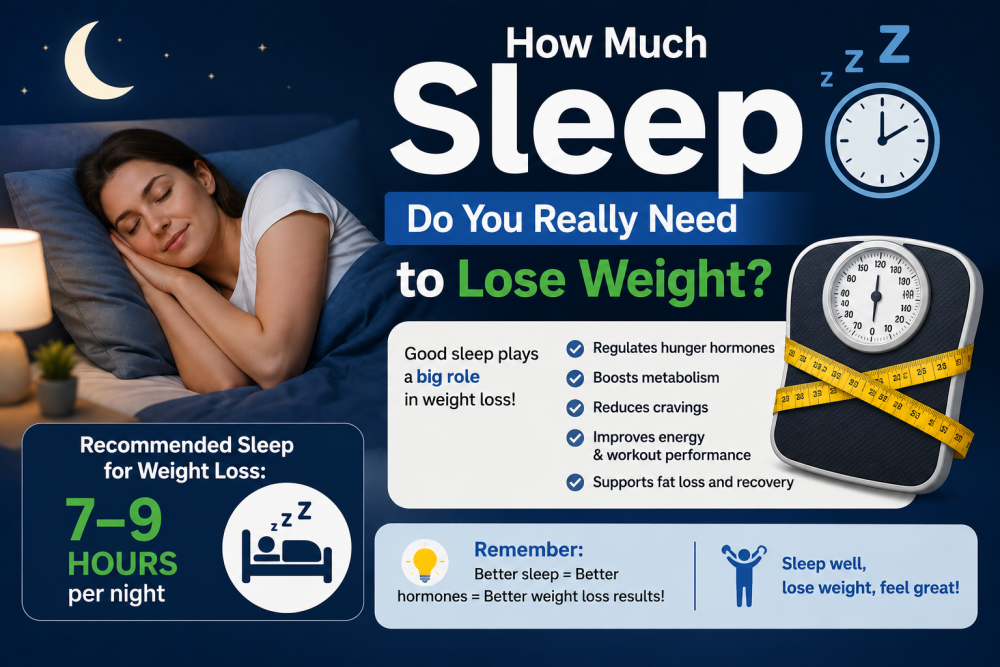
Seven to nine hours. That's the answer, the same one the sleep science bodies give for adults generally, and if you're losing weight it's not a nice-to-have, it's load-bearing.
But the number isn't really the story. The story is what happens to a diet when sleep drops below it, because short sleep doesn't just make you tired, it actively rewires the next day against you: hungrier, weaker-willed, more sedentary, and, this is the finding that should be printed on gym walls, more likely to lose muscle instead of fat even when the scale moves. Sleep isn't recovery from your weight loss effort. It's a working part of the machine, and this article is the full tour of why, plus the fixes that actually move it.
The standing line, meant genuinely: general information, not medical advice, and anyone with suspected sleep disorders, health conditions, or a history of disordered eating should be working with a professional, there's even a section below on when that's specifically the right move.
What Short Sleep Does to a Diet, Mechanism by Mechanism
The case against skimping isn't one effect, it's a pile-on, and it's worth seeing the whole pile.
Hunger hormones move first. Cut sleep and ghrelin, the hormone that says eat, rises, while leptin, the one that says enough, falls. That's not folklore, it's one of the most replicated findings in sleep research, and it means the extra hunger after a bad night is chemistry, not character. Worse, the cravings skew specific: tired brains reach for dense, quick calories, the pastry, not the protein, and brain-imaging work shows reward centers lighting up harder for junk food after short sleep. You're not weak at 4pm after a five-hour night. You're outnumbered.
Willpower drains second. Food decisions burn self-control, dozens of them a day, and sleep deprivation drains exactly the mental battery that pays for them. The same person, same diet, same fridge, makes measurably worse food choices tired than rested, which is why diets so often break at night, at the end of the willpower budget, rather than at breakfast.
The body burns less, third, and sneakily. Tired people move less without noticing, fewer steps, less fidgeting, the couch winning negotiations it usually loses, so the "calories out" side sags while hunger pushes "calories in" up. A pincer.
And the one that matters most for anyone dieting: short sleep changes what you lose. In the research that should be famous, dieters sleeping around five and a half hours lost similar total weight to those sleeping eight and a half, but dramatically more of it came from muscle and less from fat. Same deficit, same scale victory, worse body underneath, slower metabolism after. If you're eating in a deficit on five hours of sleep, you're doing the work and splitting the reward with the wrong outcome.
Add the long-game effects, worse insulin sensitivity after even a few short nights, elevated cortisol with its association with fat settling around the middle, and the extra eating window that being awake at 1am simply provides, and the verdict isn't subtle. Short sleep is a headwind against every single thing a diet is trying to do.
So Are Seven to Nine Non-Negotiable?
Mostly, with honest edges. The range exists because people genuinely differ, some adults thrive at seven, others truly need nine, and the test is unglamorous: how you feel and function on the hours you're getting, without an alarm dragging you out and caffeine propping the morning up. Consistently needing an alarm to end sleep and a stimulant to start the day is your answer, delivered daily.
Two edge questions worth settling. Can you lose weight on six hours? Yes, people do, the deficit still rules, it's just harder on every front above and tilted toward muscle loss, you're playing the same game on a muddy pitch. And does more sleep burn fat? No, sleep isn't a fat-burning activity, nine hours won't out-earn eight in calories. The mechanism runs through behavior: enough sleep makes the eating and moving parts of weight loss dramatically more doable. Sleep is the enabler, not the exercise.
Naps, since someone always asks: a short one, twenty to thirty minutes, patches a bad night's decision-making decently and doesn't hurt. Naps long or late enough to sabotage the night's sleep are borrowing from the bank they're meant to repay.
Fixing Sleep Like You'd Fix a Diet
The good news buried in all this: sleep responds to structure the same way eating does, and the high-yield fixes are few.
Consistency beats duration tricks. Same sleep and wake time, weekends included, within an hour or so, does more for sleep quality than any gadget, because the body's clock rewards predictability and punishes the Monday whiplash of weekend schedule swings.
Guard the runway. The hour before bed is approach, not landing: screens dimmed or down, the doomscroll is a hunger-hormone delivery system in its own right, big meals finished a few hours earlier, the bedroom dark, quiet, and cool. Boring advice. Boringly effective.
Mind the two liquids. Caffeine has a longer tail than it feels, a cutoff somewhere in the early afternoon protects the night, and alcohol is the great impostor: it knocks you out, then wrecks the second half of the night's sleep quality, which is why "a drink to sleep" produces tired mornings and, per everything above, hungrier days. The nightcap is quietly a diet decision.
And connect it to the rest of the machine: the daily walk from our belly fat guide improves sleep, good sleep funds the willpower the diet plan needs, the protein-anchored eating keeps blood sugar steadier through the night. The health habits are a flywheel, and sleep is the axle they all turn on.
When It's a Doctor Conversation
One flag this article should raise clearly. If you snore heavily, wake gasping, or feel wrecked after apparently full nights, sleep apnea is a real possibility, it's common, underdiagnosed, tightly tangled with weight in both directions, weight can worsen it and it sabotages weight loss, and it's very treatable. Same referral for insomnia that persists despite honest hygiene: sleep medicine exists, works, and beats years of white-knuckling. Fixing a disorder outperforms every tip on this page combined, and suspecting one is exactly the moment for a professional rather than an article.
The Bottom Line
Seven to nine hours, consistently timed, is the honest answer, and the reason is bigger than tiredness: short sleep raises hunger chemically, drains the willpower diets run on, quietly reduces movement, and, most costly of all, shifts weight loss away from fat and toward muscle, the exact opposite of the goal. Sleep isn't the soft part of a weight loss plan. On the evidence, it's the part the other parts depend on.
Set the consistent schedule, guard the last hour, cut the caffeine tail and the nightcap illusion, and treat suspected apnea or stubborn insomnia as the medical questions they are. Then watch the diet get easier, not because anything changed on the plate, but because you finally stopped playing uphill.
FAQs: Sleep and Weight Loss
Can I lose weight on 5 or 6 hours of sleep?
It's possible, the calorie deficit still decides, and it's meaningfully harder and worse: hunger hormones run higher, willpower runs lower, and the landmark research shows short sleepers in a deficit losing far more muscle and less fat than the well-slept on the same diet. If weight loss matters to you, sleep is one of the cheapest advantages available.
Does sleeping more burn fat?
Not directly, sleep isn't exercise, and extra hours don't out-burn fewer ones. The effect runs through behavior and hormones: adequate sleep normalizes hunger, protects decision-making, keeps daily movement up, and steers a deficit toward burning fat rather than muscle. It enables the losing; it doesn't do the losing.
Why am I so hungry after a bad night's sleep?
Chemistry, not weakness: short sleep raises ghrelin (the hunger signal) and lowers leptin (the fullness signal), while the brain's reward response to calorie-dense food gets louder. Knowing that, the practical defense on tired days is structural, a protein-heavy breakfast and pre-decided meals, rather than trusting willpower that chemistry has already taxed.
What time should I sleep to lose weight?
The clock matters less than the consistency: a regular sleep and wake time your schedule can actually sustain, hitting seven to nine hours, beats any specific bedtime. Very late schedules do add risk mostly through the extra late-night eating window, so earlier tends to help for that mundane reason rather than any metabolic magic hour.
Can poor sleep cause belly fat specifically?
It contributes: chronic short sleep elevates cortisol, which is associated with fat storage around the middle, worsens insulin sensitivity, and drives the eating patterns that build central fat. No sleep schedule spot-reduces, as our belly fat guide explains, fat loss is a whole-body affair, but fixing sleep removes one of the specific headwinds aimed at the waistline.
Should I see a doctor about sleep before dieting?
If you snore heavily, wake gasping, or stay exhausted after full nights, yes, that's the sleep apnea pattern, it's common, treatable, and tangled with weight in both directions, and treating it can unlock everything else. Persistent insomnia despite consistent habits earns the same referral. A diagnosed and managed sleep problem beats every optimization tip in this article combined.