One job. That's all a weight-loss breakfast has, and it isn't being small.
The job is lasting until lunch. Because that virtuous little breakfast that "saved calories" at 8am? By half past ten it's detonated into vending-machine snacks, and nothing was saved, the eating just moved somewhere worse. What actually does the job is protein, 20 to 30 grams of it, and here's the uncomfortable audit: toast, cereal, fruit, pastry, the whole classic breakfast lineup, contains almost none. That's the diagnosis. Mornings don't go wrong at 8. They go wrong because of what 8 was missing.
The fix, then, as a list. Easy ones, and I mean actually easy, five to ten minutes or made the night before, each built around a protein anchor, each with real numbers attached, sorted by the kind of morning you're actually having. And near the end, a bit of honesty about skipping breakfast altogether, spoiler, the cereal companies were not a neutral party in that debate.
Small print, said plainly: general information, not personal advice, and anyone with health conditions or any history of disordered eating should shape their mornings with a professional rather than a list from the internet.
The Five-Minute Tier: For Real Mornings
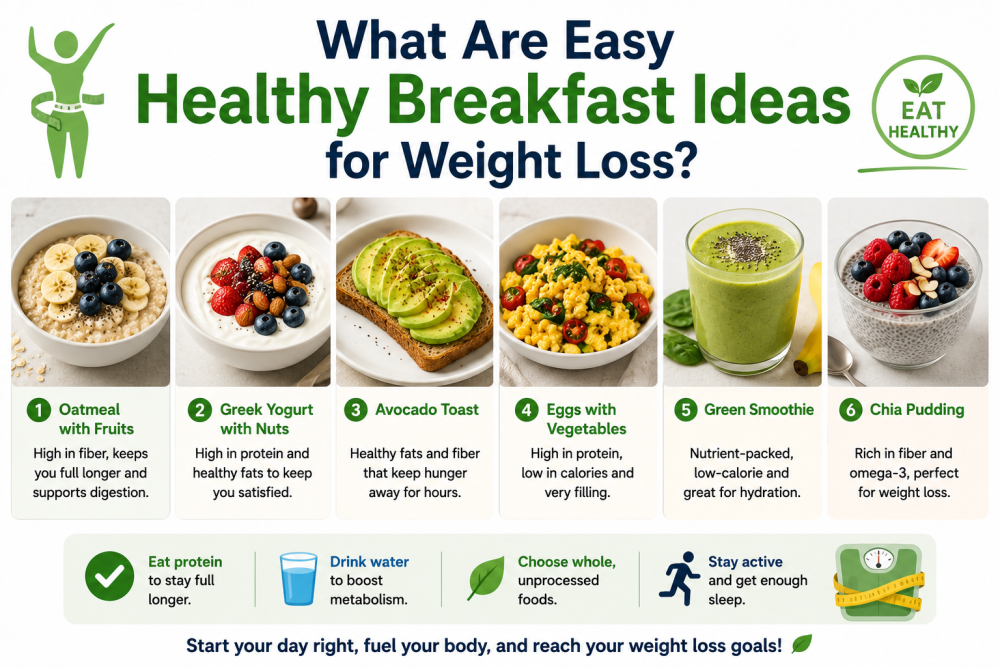
Eggs first, obviously. Still undefeated. Two or three of them, scrambled or fried in a teaspoon of oil, whatever vegetables are loitering in the fridge, a slice of proper toast if you want one. Fifteen to twenty grams of protein, 250 to 350 calories, six minutes including washing the pan. The satiety research on eggs goes back decades and all points the same direction, and no box in the cereal aisle has ever beaten them on cost, speed, or how long they hold you. Sunday tip: boil a batch, and the weekday version drops to two minutes.
No stove? Greek yogurt bowl. Big bowl of Greek yogurt or thick curd, handful of berries or whatever fruit's around, spoon of seeds, and then the trick, and it really is the whole trick: a sprinkle of muesli or granola on top for crunch. Not a bowl of granola with yogurt on it. Flipped the right way round you get 20 to 25 grams of protein for around 300 calories. Flipped the wrong way, the standard cafe version, you've got dessert with a marketing team.
Cottage cheese toast is having its moment and deserves it: a thick layer on one or two slices of good bread, pepper and tomato on top for the savory version, or a drizzle of honey for the sweet one, 15 to 20 grams of protein, endlessly variable, ninety seconds.
The Prep-Ahead Tier: For Mornings That Don't Exist
Overnight oats, with a correction most recipes skip. Oats and milk alone? That's a carb breakfast wearing a health halo, it'll fade on you by ten. The working version stirs in Greek yogurt or a scoop of protein powder, ideally both, plus chia seeds, then lets the fridge do the cooking. Make five jars Sunday night, that's the whole week sorted at 20-plus grams each, and rotating flavors, cocoa, mango, apple-cinnamon, keeps the routine from feeling like penance.
Egg muffins are the savory equivalent: eggs whisked with vegetables and a little cheese, baked in a muffin tin, twelve portable breakfasts from twenty minutes of Sunday effort. Two or three muffins, 15 to 20 grams of protein, reheat in a minute, and they survive a commute better than any smoothie.
And besan chilla, the chickpea-flour pancake, earns its slot for the readers who grew up with it and the ones about to discover it: batter takes two minutes, cooks like a savory crepe, pairs with curd for a 15-to-20-gram breakfast that costs pennies.
The Drinkable Tier: Rules Required
A smoothie is either the best weight-loss breakfast in this article or a 500-calorie juice, and the recipe decides which. The formula that works: milk or unsweetened soy, one scoop of protein powder, one fruit, a handful of spinach you will not taste, I promise, and a spoon of peanut butter or seeds. Ninety seconds of blender noise, 25 to 30 grams of protein, 300 to 400 calories. The version that fails is fruit plus juice plus honey plus granola, which is sugar all the way down and hungry by ten. One ingredient separates them. The scoop. Non-negotiable.
Same logic applies to the coffee-dependent: a protein shake alongside the coffee beats the flavored-latte-and-pastry combination by 300 calories and 25 protein grams, daily, which over a few months is most of a waistline.
The Honesty Section: Skipping Breakfast
Here's what the cereal decades didn't want printed: breakfast is not mandatory, and skipping it is not metabolic sabotage. The research settled this a while ago, meal timing matters far less than daily totals, and plenty of people lose weight comfortably eating in a shorter window, which is all intermittent fasting is.
The practical test is personal: if skipping breakfast leaves you calm until a sensible lunch, that's a perfectly good pattern, enjoy the simplicity. If it leaves you feral by 11 and inhaling whatever the office offers, you're a breakfast person, eat the protein anchor and stop fighting your wiring. Both camps are right about themselves and wrong about each other, and the whole argument dissolves once you notice the real rule: the first meal of your day, whenever it lands, should be built like the breakfasts above, protein first.
What Makes a Breakfast Fail
Quick tour of the graveyard, because knowing the villains is half the game.
Villain one, the carb-only start. Toast and jam, cereal and milk, fruit by itself, pastry anything. Burns off by mid-morning, and then it's you versus the snack drawer, negotiating.
Villain two, dessert in disguise. Flavored yogurts carrying more sugar than the plain kind ever admits. Granola, which I love and which is, calorically speaking, a topping that hired a publicist. Juice. Smoothie-shop smoothies. The entire noble genre of banana bread.
Villain three, the portion illusion. Nut butter, avocado, seeds, all genuinely good for you, all dense as bricks. A spoon is an ingredient. A ladle is a second breakfast wearing the first one's clothes.
Nothing here is banned, that's not the point. The point is that all of it needs a protein anchor sitting next to it, and a portion that can survive arithmetic.
The Bottom Line
So what's the engine under all of this? The same one, every time. Twenty to thirty grams of protein, eggs, Greek yogurt, cottage cheese, besan, or a smoothie built right, with fruit or vegetables around it and the carbs demoted from headliner to backing band. Normal mornings, use the five-minute tier. Chaotic ones, the jars and muffins you made Sunday. Commutes, the blender. And if you're one of the people who genuinely runs fine on no breakfast at all, that's allowed too, whatever the cereal box said.
Pick two or three from the list, rotate them until they're automatic, and let the 10:30 vending machine wonder where you went. Mornings are the easiest meal to systematize, which makes them the cheapest weight-loss win in the whole day.
FAQs: Healthy Breakfasts for Weight Loss
What is the best breakfast for losing weight?
Honestly? Whichever one you'll actually repeat. Eggs with vegetables, a yogurt-first Greek yogurt bowl, cottage cheese toast, overnight oats with the protein correction, a smoothie built on the formula, they all work because they all deliver the same thing, 20 to 30 grams of protein at a sane calorie count. The anchor matters. The specific vehicle mostly doesn't.
How many calories should a weight loss breakfast be?
For most adults, somewhere between 250 and 400 calories works well, big enough to hold until lunch, small enough to leave room for the day. The better focus than the exact number is composition: the same 300 calories as eggs and vegetables lasts hours longer than as toast and jam.
Is skipping breakfast bad for weight loss?
No, and it took surprisingly long for that answer to escape the cereal era. Daily totals beat meal timing, full stop, and plenty of people lose weight happily eating in a shorter window. Run the personal test: calm until a sensible lunch, you're a skipper, enjoy the simplicity. Feral by 11 and raiding the office biscuits, you're a breakfast person, eat the anchor. Both types are right about themselves.
Are oats good for weight loss?
Good, once you fix them. Plain oats and milk are mostly carbs and fade fast, that's the dirty secret of porridge. Stir Greek yogurt through, add a protein scoop, or put eggs alongside, and now oats earn their reputation, the fiber genuinely helps fullness once protein shows up to do the heavy lifting. Overnight oats make the fix effortless, it's one extra stir on Sunday.
What's a good high-protein breakfast without eggs?
Greek yogurt or thick curd bowls (20 to 25 grams), cottage cheese toast (15 to 20), protein-corrected overnight oats (20-plus), a milk-and-protein-powder smoothie (25 to 30), tofu scramble, or besan chilla with curd (15 to 20). Eggs are the convenient classic, not a requirement; the anchor principle has plenty of routes.
Can I eat the same breakfast every day while losing weight?
Not only can you, it's a quiet superpower. One decision, deleted from every morning forever. The numbers stay predictable, the habit goes automatic, and automatic is where diets actually live or die. If boredom creeps in, rotate flavors inside the formula, the yogurt bowl and the overnight jar both take endless variation without the math ever noticing.