Let's open with the sentence that gets this topic in trouble: most famous "metabolism boosters" are real, measurable, and too small to matter. The green tea, the chili, the ice water, the apple cider vinegar, all of them nudge the needle by amounts that a single biscuit erases. That's not cynicism, that's the published numbers, and any article that skips it is selling you something.
Here's the honest good news underneath: metabolism does respond to behavior, meaningfully, through a handful of unglamorous levers, muscle, protein, daily movement, sleep, and, the one nobody expects, not crash dieting. This article ranks the levers by what they actually move, keeps the famous tiny tricks in their correctly labeled tiny box, and, since this is a health topic, carries the standing line up front: general information, not medical advice, and anyone with thyroid concerns, medical conditions, medications in play, or a history of disordered eating should be working with a professional, there's a section on when that specifically applies.
First, What Metabolism Actually Is
Quick anatomy of the number, because the levers make sense once you see the parts. Your daily burn has four pieces: the basal metabolic rate, what your body spends just running itself, which is the majority of the total, the thermic effect of food, the cost of digesting what you eat, exercise, the workouts themselves, and NEAT, non-exercise activity thermogenesis, all the moving that isn't exercise, steps, fidgeting, standing, stairs, life.
The surprise in that breakdown, and the key to this whole article: the workouts are usually the smallest changeable slice, and NEAT is often the biggest one. Two people with the same body and the same gym habit can differ by hundreds of calories a day purely on how much they move through ordinary life. Hold that thought.
Level One: Muscle, the Only True Upgrade
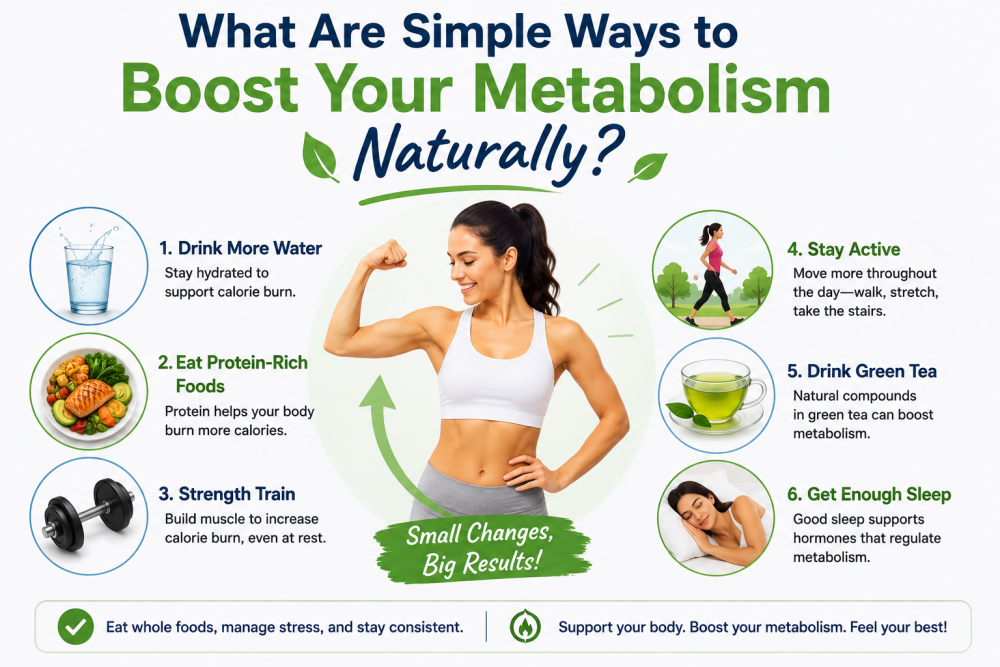
Muscle is metabolically expensive tissue, it burns energy around the clock just existing, which makes strength training the only intervention on this page that genuinely raises your baseline rather than borrowing a temporary bump. The per-kilo effect is modest, don't believe the wilder claims, but it compounds: more muscle burns more at rest, lets you train harder, and, crucially for anyone dieting, defends the metabolic rate that weight loss otherwise erodes.
The prescription is the same one our diet plan guide carries: two to four strength sessions weekly, progressive, and no gym required, the bodyweight version in our home workout coverage does the job. This is the slow lever and the real one. Everything else on this list works better on top of it.
Level Two: Protein, the Expensive Food
Of the calories you eat, some are spent digesting, and protein is by far the costliest to process, its thermic effect runs several times higher than carbs or fat, meaning a high-protein diet quietly burns more than the identical calorie count eaten as anything else. Add protein's fullness effect and its muscle-defending role, and the same 1.6-to-2.2 grams per kilo target from our health cluster earns yet another justification, third article running, and that consistency is the point: the levers stack.
Practical version: protein anchor at every meal, per the breakfast and vegetarian guides. Your metabolism pays you a small tax rebate on every gram.
Level Three: NEAT, the Sleeping Giant
Here's the lever hiding in the anatomy lesson: the difference between a sedentary day and a naturally active one, hundreds of calories, dwarfs almost every supplement and hack ever sold, and it's available without a single workout.
The boosters that actually boost: the daily walk, our belly fat guide's non-negotiable, standing and pacing on calls, stairs as default, parking badly on purpose, the two-minute movement break every hour of desk work, and treating errands as steps rather than car trips. Individually trivial. Summed across a day, every day, it's the largest behavioral difference between high-burning and low-burning people of the same size, and the research on this is embarrassingly consistent. If "boost your metabolism naturally" has one honest answer, it's this dull, mighty one: move more between the workouts.
Level Four: Sleep, the Regulator
Short sleep doesn't just make you hungrier, our sleep and weight loss guide covers that chemistry, it also degrades the metabolic machinery directly: insulin sensitivity worsens after even a few bad nights, and dieters on short sleep lose more muscle and less fat, which, per lever one, is a direct metabolic pay cut. Seven to nine consistent hours isn't a wellness garnish on this list. It's the maintenance schedule for every other lever.
The Anti-Lever: Stop Crashing
The biggest metabolism mistake isn't failing to boost it, it's actively suppressing it, and crash dieting is how. Cut calories brutally and the body adapts in self-defense: burn drops, movement quietly declines, muscle gets spent as fuel, and the "metabolic adaptation" that follows is why crash dieters so often regain past their starting point with a lower burn than they began with. The repair is the same modest-deficit, high-protein, keep-lifting approach the whole health cluster preaches, roughly half to one percent of body weight per week, boring, sustainable, and metabolism-preserving. The fastest way to a slow metabolism is dieting like you're in a hurry.
The Tiny Tricks, Correctly Labeled
Now the famous ones, with their honest sizes. Caffeine: real, the most legitimate of the bunch, a modest temporary bump and a workout enhancer, worth having, worth zero supplements. Green tea: the caffeine plus a little extra in studies, small enough that enjoying the tea is the point. Cold water: technically your body warms it, the math is rounding-error territory, hydrate because hydration matters, not for the burn. Spicy food: measurable, fleeting, negligible, eat chili for joy. And the "metabolism booster" supplement aisle: overwhelmingly unproven, occasionally unsafe, and reliably expensive, the honest summary is that nothing in a bottle outperforms a walk, and anything promising otherwise is pricing your hope, not its ingredients.
None of these are lies exactly. They're truths at the wrong magnification, and the industry's trick is showing you the percentage without the absolute number.
When It's a Doctor Question
One genuine flag: if you're gaining weight or exhausted despite honest habits, or you have symptoms like persistent cold intolerance, hair loss, or dramatic energy changes, thyroid and other medical causes are real, testable, and treatable, and no amount of NEAT advice substitutes for the blood test. Same referral if metabolism worry is shading into restrictive eating territory, that's a conversation for a professional, not an optimization project. The levers in this article are for healthy people; ruling out the medical layer comes first when the signs point there.
The Bottom Line
Boosting metabolism naturally, ranked by what actually moves: build and keep muscle with regular strength work, the only true baseline raise. Eat protein at every meal and collect the digestion tax rebate. Move constantly between workouts, NEAT is the biggest behavioral lever there is. Sleep seven to nine consistent hours so the machinery runs as built. And above all, don't crash diet, the popular route to the exact slow metabolism everyone's trying to escape. The tea, the chili, the cold water: fine, pleasant, and a biscuit's worth of rounding error.
The honest summary fits in one line: metabolism isn't boosted by tricks, it's maintained by muscle, movement, protein, and sleep, and the supplement aisle is where that sentence goes to be forgotten. Skip the aisle. Take the stairs.
FAQs: Metabolism, Honestly
What actually boosts metabolism the most?
In order of real impact: building muscle through strength training (the only intervention that raises your resting burn), daily non-exercise movement, walking, standing, stairs, which can swing hundreds of calories a day, a high-protein diet via digestion's thermic cost, and consistent sleep protecting the whole system. The famous tricks, green tea, cold water, spicy food, are real but trivially small.
Do metabolism booster supplements work?
As a category, no: the evidence behind the supplement aisle ranges from weak to absent, effects where they exist are smaller than a daily walk's, and some products carry genuine safety concerns. Caffeine is the one legitimately active ingredient, and coffee already delivers it. Money aimed at metabolism is better spent on food and, if anything, a gym setup.
Does eating small frequent meals speed up metabolism?
No, this one's been tested thoroughly: meal frequency doesn't meaningfully change total burn, the thermic effect of food tracks what you eat over the day, not how you divide it. Eat the meal pattern that controls your hunger best, three meals, five small ones, either works, and put the attention on protein content instead, which does move the number.
Why is my metabolism slow even though I eat little?
Sometimes it's adaptation, chronic under-eating suppresses burn, reduces unconscious movement, and costs muscle, the classic crash-diet trap, and the fix is a modest sustainable intake with strength training, not deeper cuts. And sometimes it's medical: thyroid conditions and other causes are real and testable, so persistent unexplained fatigue or weight gain despite honest habits is a doctor visit, not a supplement purchase.
Does drinking cold water really burn calories?
Technically yes, your body spends energy warming it, and the amount is a rounding error, a biscuit's worth of difference across many glasses. Hydration genuinely supports training, appetite regulation, and energy, so drink the water, just credit it for the right reasons rather than the burn.
At what age does metabolism slow down?
Later and less than folklore claims: the best modern research finds metabolism, adjusted for body size, holds remarkably stable through mid-adulthood, with the real decline arriving around 60. The "slowing metabolism" of the 30s and 40s is mostly muscle quietly lost and movement quietly reduced, both of which are exactly the levers this article ranks first, and both reversible.