The problem with most vegetarian weight loss advice is that it's written by people who think a salad is a meal. So the salad gets eaten, hunger arrives at 4pm like an invoice, the biscuits vanish, and vegetarianism gets blamed for something a lack of protein did.
The fix is one rule. Every meal gets anchored with 25 to 40 grams of protein. Eggs, dairy, legumes, soy, pick your fighters. Protein is what keeps you full enough to eat less without it feeling like a hostage situation, and that's genuinely the entire trick, everything else in this article is just recipes for obeying it.
And look, vegetarian food does protein wonderfully. Dal. Paneer. Greek yogurt, tofu, chickpeas, eggs. What it doesn't do is protein by accident, the way a meat-centered plate does, which is why vegetarian meals for weight loss have to be designed on purpose. So let's design some.
Quick ground rules. "Vegetarian" here means lacto-ovo, dairy and eggs included, with the egg-free swaps flagged as we go and everything adaptable for vegans via tofu, tempeh, and legumes. Protein counts are honest approximations, portion sizes move them. And the standing line, meant genuinely: general information, not personal advice, and anyone with health conditions or a history of disordered eating should build their eating plan with a professional rather than an article.
Breakfasts That Prevent the 11am Raid
Breakfast is where it usually goes wrong. Toast, cereal, fruit, maybe a biscuit with the chai. All carbs. All lovely. All gone from your bloodstream before the 11 o'clock meeting ends, which is why the biscuit tin starts calling. Fixes below.
The Greek yogurt bowl is the workhorse: a big serving of Greek yogurt or thick curd, berries or chopped fruit, a spoon of seeds, a little muesli for crunch rather than as the base, that inversion is the whole trick, and you're at 20 to 25 grams of protein for a breakfast that holds until lunch. Cottage cheese does the same job for people on that side of the great curd divide.
Eggs, any way you like them, remain the category champion: a three-egg vegetable omelet or scramble lands around 20 grams, costs little, takes six minutes, and has decades of satiety research quietly backing it. Egg-free version: a firm-tofu scramble with turmeric and vegetables gets remarkably close in both texture and protein.
And for the drink-it crowd, a smoothie built properly, milk or soy milk, a scoop of whey or plant protein, a banana, a spoon of peanut butter, delivers 25 to 30 grams in two minutes. The protein scoop is what separates a meal from a dessert here; fruit-only smoothies are juice with a publicist.
Lunches and Dinners: The Main Event
Same template for everything below, and it's worth tattooing somewhere: protein anchor, mountain of vegetables, starch portion sized to your actual day. Sitting at a desk? Small. Trained hard? Bigger. Right, the rotation.
Start with dal, and I mean dal done properly. Not the thin cupful that shows up beside a mountain of rice, the inverse: a thick, generous bowl of the stuff, cup and a half minimum, with the rice demoted to a side. That flip alone, more dal, less rice, turns a meal half of India already eats daily into a fat-loss meal, 15 to 20 grams of protein plus the fiber that makes lentils weirdly, stubbornly filling.
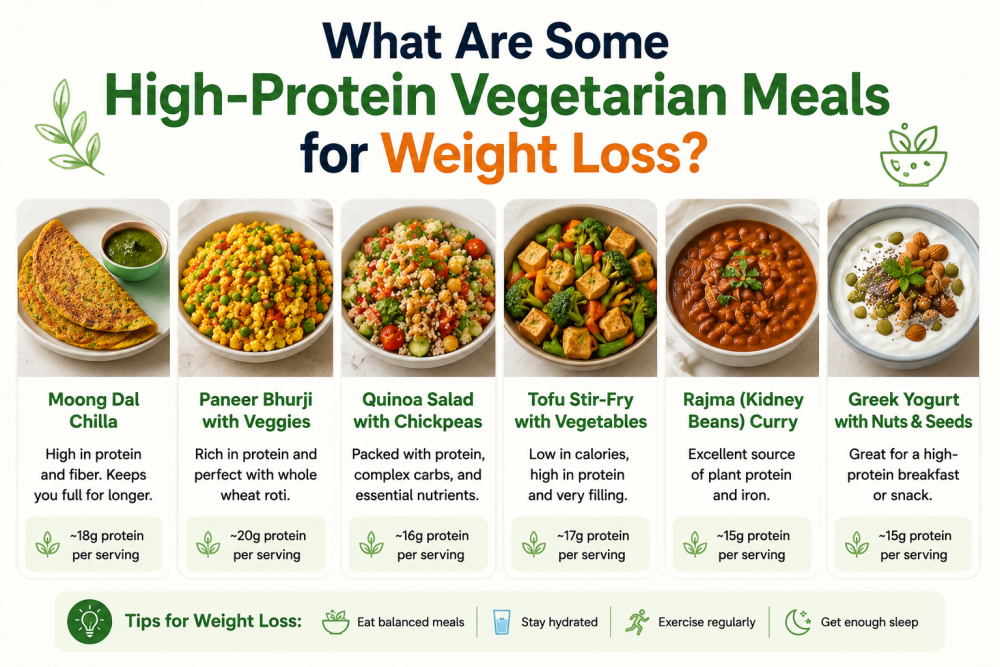
Paneer earns its own paragraph, with one honest warning. A hundred and fifty grams of paneer carries around 25 grams of protein, and grilled, in a tikka, tossed through a bhurji with vegetables, or cubed into a salad, it's a weight-loss powerhouse. Swimming in a cream gravy with four naan, it's a celebration meal wearing a health halo. Same ingredient, opposite outcomes, the preparation is the diet. Low-fat paneer tilts the math further in your favor if it's available to you.
Dairy-free? Tofu does everything paneer does. A whole block of the firm kind in a stir-fry, vegetables piled high, soy-garlic sauce, small portion of rice underneath, that's 25 to 30 grams and one pan to wash. Tempeh, the nuttier, denser cousin, goes higher still.
Then the chickpea family, which can carry a whole week by itself. Chana masala with the same rice-flip trick. A big chickpea and feta salad. A bowl built on hummus with whole chickpeas, chopped salad, and a boiled egg or two folded through, my personal lazy-lunch champion. Beans of every stripe play the same position, a black bean chili thick enough to stand a spoon in, rajma treated like the dal above, all in that 15-to-20-gram range with the fiber doing bonus work.
And the modern classics: a quinoa bowl, one of the rare plant foods that's a complete protein by itself, loaded with roasted vegetables and topped with paneer, tofu, or eggs, or high-protein pasta, the lentil and chickpea flour versions now in every supermarket, which quietly double the protein of an ordinary pasta night with sauce doing its usual work of hiding vegetables.
Snacks That Work For You Instead of Against You
The between-meal gap is where weight loss quietly succeeds or fails, so stock accordingly: roasted chana or roasted chickpeas, a handful at a time. A cup of curd or a small Greek yogurt. A couple of boiled eggs, the original portable protein. Edamame, absurdly underrated, ten grams of protein per cup and weirdly satisfying to eat. A small handful of nuts and seeds, with the honest note that nuts are protein-adjacent but calorie-dense, a handful is a snack, a bag is a meal's worth of calories in disguise. And whey or a plant protein shake as the emergency lever for days that fall apart, not a requirement, just a very convenient patch.
The Mistakes That Undo It All
Four traps catch vegetarian dieters over and over, so, the graveyard tour, brief edition.
Carb creep: vegetarian eating drifts toward bread, rice, and potatoes as the plate's center of gravity unless protein is placed there deliberately, and a meatless plate isn't automatically a diet plate. Fried everything: pakoras, fried paneer, and creamy gravies convert excellent protein sources into calorie bombs, the cooking method is doing more dietary work than the ingredient. The giant healthy bowl: nuts, seeds, avocado, oil, dried fruit, granola, all nutritious, all dense, and a "salad" carrying all six can outcalorie a burger, portion the toppings like the treats they are. And drinking calories, sweet lassis, sugary chai rounds, juices, the same liquid-calorie rule every honest diet article ends up repeating, because it's the same leak in every boat.
The Bottom Line
So what does this all boil down to? One rule, three times a day. Anchor with protein, 25 to 40 grams, from whichever corner of the vegetarian pantry you like best, then pile on vegetables and give yourself only as much starch as your day earned. That's it. The rotation up there covers weeks without a repeat, the snack shelf plugs the gaps, and if the plan leaks anywhere, it's leaking through one of the four traps: carbs quietly taking over the plate, the frying pan, the bottomless "healthy" bowl, or something sweet in a glass.
Protein keeps you full, fullness keeps the deficit livable, and livable is what makes it still be working in month four. Build the plate around the anchor and the rest mostly takes care of itself.
FAQs: High-Protein Vegetarian Weight Loss
How much protein do I need per day as a vegetarian trying to lose weight?
The range the research keeps pointing at is 1.6 to 2.2 grams per kilo of body weight, so 100 to 150-something grams a day for most adults. Sounds like a lot. It's very reachable as a vegetarian, three anchored meals at 25 to 40 grams each gets you most of the way, and a protein-y snack or a shake closes whatever's left.
What vegetarian food has the most protein?
Paneer and cottage cheese lead the whole-food pack, around 25 grams in a 150-gram portion. Firm tofu and tempeh run 20 to 30 per proper serving, Greek yogurt gives you 15 to 20 a bowl, eggs are 6 or 7 each, and a genuinely generous bowl of lentils or chickpeas lands 15 to 20. Protein powder beats all of them per scoop, but it's the concentrate, not the diet.
Can I lose weight on a vegetarian diet without counting calories?
Plenty of people do, structure instead of arithmetic. Anchor every meal with protein, let vegetables take half the plate, keep starch modest, snack off the protein shelf, and get the sugary drinks out of the house. Give that a few honest weeks. If nothing's moving, then track for a fortnight, and I'd bet on the leak being oil, toppings, or portions that grew when nobody was watching.
Is paneer good for weight loss?
Genuinely good, prepared plainly: grilled, in a bhurji, or through salads, it delivers about 25 grams of protein per serving with strong satiety, and low-fat versions improve the math further. The same paneer deep-fried or served in cream gravies becomes one of the most calorie-dense meals in vegetarian cooking, so the preparation, not the ingredient, decides which way it cuts.
What's a high-protein vegetarian breakfast besides eggs?
Four that work: a thick curd or Greek yogurt bowl with fruit and seeds, 20 to 25 grams. A smoothie built around milk and a protein scoop rather than just fruit, 25 to 30. Tofu scramble with vegetables, roughly 20. Or besan chilla, the chickpea-flour pancake, with curd alongside, an underrated classic. Notice what they share, the protein is the base of the plate, never a garnish on top of carbs.
Do I need protein powder to hit my targets as a vegetarian?
No, whole foods cover the targets for most people who plan their anchors, but a daily shake is a legitimate convenience, especially for busy days, higher targets, or vegans working without dairy and eggs. Treat it as a patch for the gap between your target and your plate, not as the foundation, and pick an unflavored or lightly sweetened one to skip the dessert-in-disguise problem.