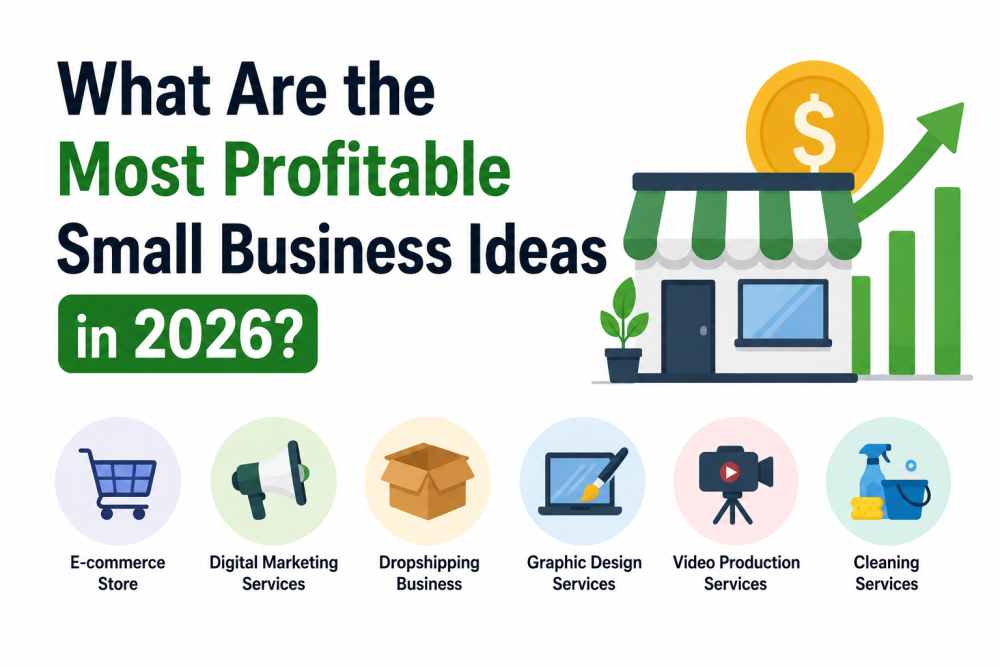
Profitable and cheap-to-start are different questions, and mixing them up is how business listicles mislead people. Our low-cost business guide answers "What can I start with under $1,000?" This article answers the question that matters once you're running: which small businesses actually keep the money they make? The answer has a formula: high margins come from three ingredients, low cost of delivery, recurring revenue, and pricing power, and every idea below is on the list because it scores on at least two.
So here's the profitability ranking for 2026, with honest margin talk instead of revenue fantasies, because "six-figure business" is a meaningless phrase, six figures of revenue at 8 percent margin is a stressful job, and a quiet local service running 50-plus percent margins on repeat customers is a wealth machine wearing overalls. The overalls, it turns out, feature heavily.
The Recurring Service Royalty
The most profitable small business category, pound for pound, is the unglamorous recurring service, and bookkeeping leads it: subscription revenue; near-zero delivery cost beyond time; software leverage doing more of the work every year; and clients who stay for a decade because switching is painful. Margins after software and overheads run famously high; the AI toolkits our business guides cover have widened them further, and the productized version, fixed monthly fee, and defined scope, per our pricing guide, are among the best pure businesses one skilled person can run. The same economics extend across the professional-service family: payroll services, tax prep with a niche, and compliance-adjacent work, which is boring, sticky, and lucrative.
Commercial and specialized cleaning is the blue-collar version of the same math: residential cleaning is a good business, and commercial contracts are a great one, with offices, clinics, and facilities on standing weekly agreements, predictable revenue, scheduled routes, and margins that improve with density; two contracts on the same street beat three across town. The specialization ladder, move-out cleans, post-construction, and medical grade climb the pricing-power ingredient directly.
And the exterior-services duo our low-cost guide flagged for cheap entry turns out to sit here too: pressure washing and mobile detailing carry per-job margins north of 70 percent once equipment amortizes, water, soap, and fuel being the entire cost of goods, and the profit ceiling is set purely by route density and rebooking habits. The trick that converts them from gigs to wealth: annual contracts, the driveway every spring, and the fleet every month, which installs the recurring ingredient the category naturally lacks.
The Skill-Leverage Tier
Niche digital services, one skill, one industry, and productization remain the highest-margin work a solo operator can sell: the delivery cost is time plus software; the pricing power comes from specialization (the restaurant-bookkeeper effect from our pricing guide); and every repetition makes delivery faster while the price holds, which is margin expansion by pure practice. The profitable versions in the 2026 cluster where businesses feel pain monthly: SEO and Google profile management for local trades, email marketing for e-commerce niches, ad management with performance pricing, and the AI implementation services our agents guide. Describe setting up the automations this site writes about for businesses that read about them and want them installed.
Online coaching and training scales the same economics further: Expertise productized into group programs or courses carries software-only delivery costs at scale, and the honest caveat carries equal weight: the market is loud, trust takes time to build, and the profitable operators are almost always practitioners first, coaches second, selling results they've personally produced. Personal training's local version, small-group sessions, and semi-private rates hold excellent margins at the neighborhood scale without the internet's noise.
The Capital-and-Patience Tier
Some of 2026's most profitable small businesses trade startup cheapness for durable margins, worth knowing even if they're a second act rather than a first. Laundromats and vending routes, the semi-passive classics, run strong margins on low labor once established, with the honest entry price being real capital and location diligence; the location IS the business, per our warnings about the YouTube version of this dream. Senior services, non-medical home help, and companionship/errands combine demographics-guaranteed demand with premium pricing for trust, and the agency model, coordinating caregivers rather than delivering every hour yourself, is where the margins scale. And the trades, the great under-discussed goldmine: licensed electrical, plumbing, and HVAC work carry pricing power most white-collar businesses dream about; aging workforces have thinned competition; and the owner-operator who adds one crew steps from good income to genuine profit. The licensing timeline is the moat and the price of admission.
The Honest Skip List: Where Margins Go to Die
Equal time for the profitable-looking traps. Restaurants and food trucks are beloved and romantic and are running some of the thinnest margins in commerce; food costs, labor, waste, and rent devour the revenue that looks so impressive from outside. The survivors are operations geniuses, and the hobbyists subsidize the industry. Generic e-commerce and dropshipping: margin math that works on the spreadsheet until ads, returns, and marketplace fees attend. Per our online-business guide's standing warning, product businesses get profitable through brand and niche, never through generic volume. And anything competing on price: cheapest is a margin decision, the worst one available, and the common thread across every profitable idea above is that none of them win by being cheap; they win by being specific, sticky, and worth it, our pricing guide's whole thesis wearing different uniforms.
The Profit Formula, Applied
Choosing between the ideas above is personal, skills, capital, and appetite, but the evaluation formula is universal: three questions against any business you're considering. What does one more sale cost to deliver? (The closer to zero, services, digital, routes with density, the better the engine.) Does revenue repeat without reselling? (Contracts, subscriptions, standing appointments: the recurring ingredient is worth more than any other; build it in from day one even where the category resists it.) And can you charge more than the market's floor? (Niche, specialization, trust, and results create pricing power; without it, margins erode on schedule.) Two of three makes a good business. Three of three, the bookkeeper with subscription clients, the pressure washer with annual contracts and a dense route, and the niche agency with performance pricing make the quiet wealth machines This article is actually about it.
The Bottom Line
The most profitable small business ideas in 2026: recurring professional services led by bookkeeping; commercial and specialized cleaning on contracts; exterior services duo converted to annual agreements; niche, productized digital services and practitioner-led coaching; and the capital tier, laundromats, senior care agencies, and licensed trades for those with the entry price. All of them run the same three-ingredient formula: cheap delivery, recurring revenue, pricing power, and the skip list. Restaurants and generic e-commerce, anything competing on price, fail in ways that revenue numbers hide until they don't.
Pick by your skills and capital, install the recurring ingredient whatever you choose, price per the pricing guide rather than the market's floor, and let the margin, not the revenue, be the number you brag about. It's the one that was always keeping score.
FAQs: Profitable Small Businesses
What is the most profitable small business to start in 2026?
Adjusted for startup cost and one-person operability, bookkeeping and recurring professional services lead to subscription revenue, minimal delivery costs, and decade-long client retention, producing margins most businesses never see. Among physical businesses, pressure washing and commercial cleaning on standing contracts deliver the strongest margin-to-entry-cost ratio.
Which businesses have the highest profit margins?
Those where one more sale costs almost nothing to deliver: productized digital services, established coaching programs, and bookkeeping-style recurring services commonly hold 50-to-80-plus percent margins, with exterior services like pressure washing near 70 percent per job after equipment. Contrast restaurants and generic e-commerce, where single-digit margins hide behind impressive revenue.
Are food businesses profitable?
Rarely at a small scale, and it's the classic trap: food costs, labor, waste, and rent consume revenue that looks spectacular from outside, leaving restaurant and food-truck margins among the thinnest in commerce. The profitable food plays are narrow, the cottage-food specialist with pre-orders and subscription meal prep from our low-cost guide, where waste approaches zero and pricing stays premium.
What makes a small business highly profitable?
Three ingredients, and the formula evaluates any idea: low cost of delivering one more sale; revenue that repeats without reselling (contracts, subscriptions, and standing bookings); and pricing power from specialization and trust. Two of three make a solid business; all three, the subscription bookkeeper and the contract-route pressure washer, build quiet wealth. Competing on price forfeits the third ingredient permanently.
Is it better to start a cheap business or a profitable one?
They're sequential more than opposed: the cheap-to-start businesses in our low-cost guide fund and teach, and the profitability moves: specializing, converting to contracts and subscriptions, raising prices, upgrading them over time, cleaning; they become commercial contracts, and freelancing becomes a productized niche service. Start with the entry cost you can afford; build toward the margin formula deliberately from month one.
How much profit should a small business make?
Healthy small-service businesses commonly net 30 to 60 percent after all costs, with the recurring, low-delivery-cost models above running higher and product or food businesses running far lower. The more useful habit than any benchmark is knowing your own margin monthly, revenue minus every true cost, including your time at a fair rate, because six figures of revenue at thin margins is a demanding job, while modest revenue at 60 percent is a business worth owning.