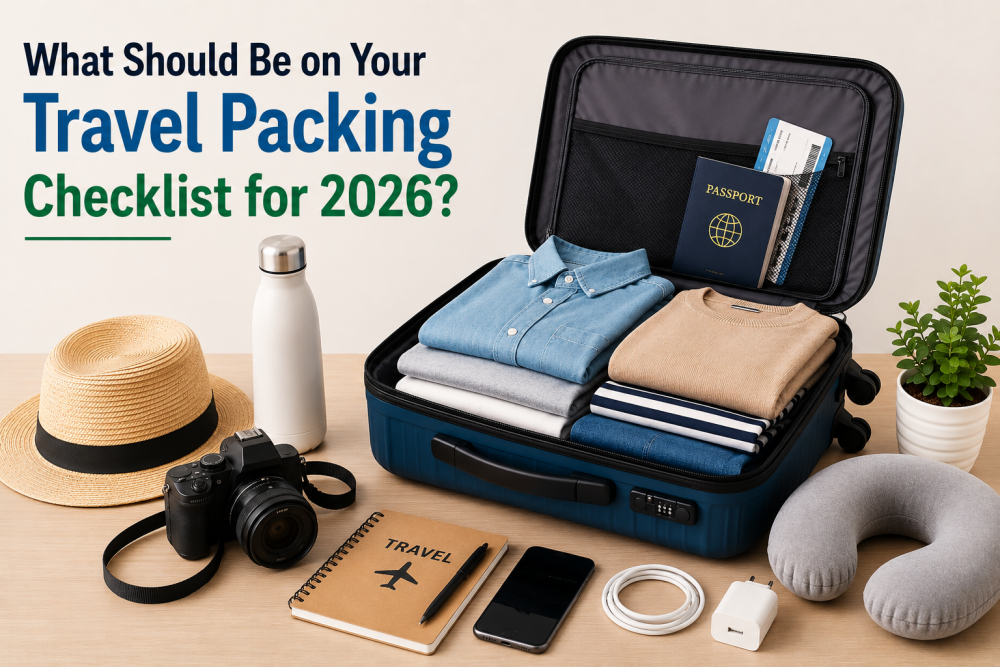
Packing has one governing rule, and everything else is detail: pack for a week, whatever the trip length, because laundry exists everywhere, and a hand-luggage-sized bag is not a compromise; it's a strategy, no checked-bag fees (the budget airlines' whole business model, per our cheap flights guide), no lost luggage, no carousel waits, and a lighter trip in every sense. Every checklist below assumes that rule and earns its exceptions.
So here's the complete 2026 checklist, organized the way packing actually fails: the documents-and-money layer that can end a trip if botched; the tech that modern travel runs on; the capsule wardrobe; the health kit with its one non-negotiable; the small extras that earn their space; and, just as important, the leave-behind list, because overpacking isn't a quirk; it's the tax beginners pay until they learn.
The Layer That Can End a Trip: Documents and Money
Passport first, and the check people skip: validity. Many countries require six months beyond your travel dates, plus any visas or authorizations per our visa-free guide, checked against your actual nationality and route. Then the redundancy kit that turns disasters into anecdotes: digital copies of your passport, insurance, and bookings in your email and cloud; one paper copy of the passport stashed separately from the real one; and your insurance details. Per the insurance guide, it's the one non-negotiable spend, saved offline with the emergency claim number.
Money travels split, never pooled, is the solo guide's rule for everyone: main card plus some cash on you, backup card, and reserve cash in a different bag or the accommodation safe, so the worst pickpocket day costs a wallet, not a trip. Add a no-foreign-fee card if you have one, a note of your bank's freeze-card number stored offline, and a small stash of home currency for the return journey's surprises.
The Tech Kit: Small, Boring, Essential
The 2026 tech layer fits in one pouch: a phone, the eSIM installed before takeoff (the solo guide's arrival protocol begins at the departure gate), a universal adapter, one cable per device plus a spare, and a power bank, packed in hand luggage always. Airline rules require it there, sized for a full phone recharge or two. Offline downloads finish the kit: maps of your first city, your bookings, translation packs for the languages ahead, and whatever entertainment the night bus demands, per the transport guide's sleeper strategies.
What didn't make the pouch deliberately? The laptop (unless work requires it, it's a kilogram of worry); the tablet duplicating the phone; the drone that needs permits you haven't checked; and the camera gear beyond what you'll genuinely carry daily. The phone won this war years ago; let it.
The Capsule Wardrobe: A Week, Rolled
The week's clothes, whatever the trip: underwear and socks for seven days, three or four tops, two bottoms that both match all the tops, one warm layer (evenings are cold everywhere eventually), one rain shell, sleepwear that can survive a hostel walk to the bathroom, swimwear regardless of destination (pools, hammams, and surprise beaches are visited on every trip), and one smarter outfit for the nice dinner or the unexpected occasion. Shoes are the weight budget's biggest line, so take the comfortable walking pair on your feet, one alternative in the bag (sandals or the smart pair) by destination, and nothing else; the third pair of shoes is the international symbol of the overpacker.
Technique, briefly, because it buys real space: roll, don't fold, packing cubes if you like order (one for clean, one becomes laundry); heaviest items are worn on travel days; and the laundry plan, a sink wash mid-trip or the local laundrette, is what makes seven days of clothes serve thirty days of travel. That plan is the whole checklist's engine.
The Health Kit and the One Non-Negotiable
The small pharmacy: painkillers, plasters, rehydration salts, antihistamines, motion sickness tablets if you're the type, and stomach remedies. Buying these at home costs pennies; buying them at 2am abroad costs a story. The non-negotiables: prescription medications in original packaging, quantities for the trip plus a buffer, with a photo of the prescription, and, for controlled or unusual medications, a two-minute check of your destination's rules; some countries restrict what surprises travelers most.
Toiletries go solid where possible: bar soap, solid shampoo, and toothpaste tablets, which is the elegant answer to hand-luggage liquid limits, with the remaining liquids in a clear bag under the limit sizes. Sunscreen by destination, insect repellent by season, and the hostel-and-night-transport comfort trio from our transport guide: earplugs, an eye mask, and a travel pillow, weighing nothing and saving nights.
The Extras That Earn Their Space, and the Pile That Doesn't
Earns it: a packable day bag (the real luggage stays locked at the accommodation, per the solo guide's habits), a small padlock for hostel lockers, a reusable water bottle (Europe's taps are fine nearly everywhere, and airport refills beat airport prices), a laundry bag, a pen (immigration forms live on), and two or three plastic or dry bags for the wet swimwear and the muddy shoes. Total added weight: under a kilogram. Total trips improved: all of them.
Doesn't earn it, the leave-behind pile: the just-in-case items (the rule: if the scenario is "maybe," the answer is "buy it there if the maybe happens"); valuables you'd mourn (the good jewelry, the sentimental watch, travel is where nice things go to be lost); the full-size anything; the fourth pair of shoes; the guidebook; the phone replaced; and the towel, unless hostels without them are actually on your route. Every item cut is a security worry, a weight, and a repacking chore deleted, and the seasoned traveler's bag is defined by what isn't in it.
The Night Before: The Five-Minute Protocol
The checklist's final page, run the evening before: online check-in done and boarding pass downloaded (budget airlines charge for airport check-in; the flights guide's true-cost rules apply); documents pouch accessible at the top of the bag; liquids bagged; power bank in hand luggage; tomorrow's first-hour plan, the eSIM, the ride app, and the pre-booked bed, per the solo guide's arrival protocol, confirmed; and the bag weighed if a budget airline's limits are in play, the bathroom scale beats the airport surprise by the exact price of the excess fee. Then sleep, which the whole trip runs better on.
The Bottom Line
The 2026 packing checklist: documents and split money as the trip-critical layer; the one-pouch tech kit with the eSIM installed before takeoff; a week's capsule wardrobe rolled into a hand-luggage bag; the small pharmacy with prescriptions handled properly; the earn-their-space extras; a day bag; a padlock; a bottle; a sleep trio; and a leave-behind pile bigger than your packing pile. Run the night-before protocol, keep the laundry plan honest, and the bag stops being luggage and becomes equipment.
Pack for a week, wash on the road, and carry it all aboard, and every trip after this checklist starts lighter, cheaper, and calmer than the ones before it, which, for an article about stuffing clothes in a bag, is a surprisingly good deal.
FAQs: Travel Packing
What are the most important things to pack for travel?
In order of trip-ending potential: passport with six months' validity plus any visas, insurance details saved offline, money split between two locations, prescription medications in original packaging, and the phone with eSIM and offline maps ready. Everything else on the checklist is comfort and savings; that layer is survival, and its digital-copy backup turns disasters into anecdotes.
Is hand luggage only really practical for long trips?
Yes, with the one habit that makes it work: the week's capsule wardrobe plus a laundry plan, a mid-trip sink wash or laundrette visit serves a month as easily as a week. The payoff compounds on budget airlines, where checked bags cost more than the fare, per our cheap flights guide, and no checked bag has ever been lost from an overhead locker.
What should I not pack for a trip?
The just-in-case pile (if the scenario is a maybe, buy it there if it happens); valuables you'd mourn; more than two or three pairs of shoes; full-size toiletries; the laptop unless work demands it; and duplicates of anything the phone does. Overpacking costs fees, security worry, and daily repacking, and the leave-behind list is the most valuable half of any checklist.
How do I pack toiletries in hand luggage?
Go solid where possible: bar soap, solid shampoo, and toothpaste tablets, which sidestep the liquid limits entirely, and bag the remaining liquids in containers under the limit size in a clear pouch, packed where security checks can reach it. Buy the destination-specific items, sunscreen, and repellent on arrival at local prices rather than carrying a bathroom across borders.
What medications can I take when traveling abroad?
Personal prescriptions in original packaging with a photo of the prescription cover most situations, plus a basic kit of painkillers, plasters, rehydration salts, and stomach remedies. The check that matters: some countries restrict medications that surprise travelers, certain painkillers and ADHD medications most commonly, so a two-minute search of your destination's rules for anything controlled or unusual belongs on every pre-trip list.
What's the best packing technique to save space?
Roll clothes instead of folding; use packing cubes if you like order (one cube migrates from clean to laundry as the trip runs); and wear the heaviest items, boots, and the warm layer on travel days, and let the capsule principle do the real work: pieces that all combine, in a week's quantity, beat any folding technique applied to too much. Space problems are almost always quantity problems wearing a technique costume.