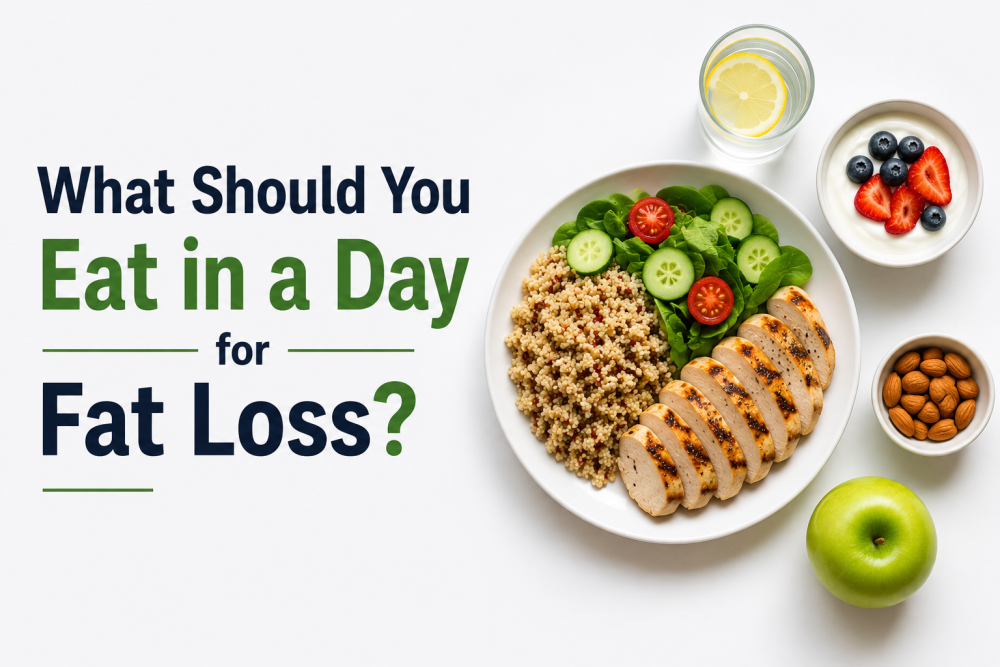
Here's a full day of fat-loss eating, meal by meal, and one honest note before the plates arrive: this is a template with swaps, not a prescription, because the day that works is the one built from foods you'll actually repeat, and rigid meal plans have a documented shelf life of about eleven days. The rules underneath are the ones our whole health section runs on: a protein anchor at every meal, vegetables doing the volume work, portions matched to your day, and the calorie logic from our targets guide deciding the totals while this article decides the shape.
Standing in line, sincerely: general information, not medical or dietetic advice; needs vary with conditions and medications, and anyone with a history of disordered eating should build their days with a professional. This template is a tool for healthy adults, not a rulebook to grade yourself against.
Morning: The Anchor That Sets the Day
The fat-loss morning has one job, per our breakfast guide: arrive at lunch calm, and 20 to 30 grams of protein are what do it. The template slots: eggs with vegetables and a slice of decent toast; the Greek yogurt or thick curd bowl built yogurt-first with fruit and seeds; the protein-corrected overnight oats; or besan chilla with curd, all in the 250-to-400 calorie zone, all holding until lunch, picked by your morning's reality (five minutes versus grab-and-go).
Coffee and tea are free passes as long as they don't arrive as desserts. Milk is fine; the syrup-and-cream construction is a snack in a cup. And the skipping-breakfast honesty from the breakfast guide applies here too: if no breakfast leaves you genuinely calm until a sensible lunch, that's a legitimate day shape; the template just shifts its protein to the meals that remain. Timing is a preference. The anchors are the rule.
Midday: The Meal That Prevents the 4pm Ambush
Lunch is where office days and home days go wrong differently: the office through the sad sandwich (all carbs, hungry by four) and home through the no-lunch drift into all-afternoon grazing, and the fix for both is the same plate: a proper protein anchor (chicken, fish, eggs, paneer, tofu, or a genuinely thick dal, 25+ grams); vegetables covering half the plate; and a fist-sized starch portion, rice, potatoes, or bread, sized to how active your afternoon actually is. Desk afternoon is smaller; training day is bigger; the portion logic from our diet plan guide is applied at noon.
The batch-cooking move makes this automatic: the same three lunches rotate weekly, cooked in one Sunday hour, per the consistency principle that decides everything in this cluster; decisions deleted are diets saved. And the drink with lunch is water or the unsweetened options, the liquid-calorie rule being the least glamorous, highest-yield line in all of fat-loss eating: the sugary drinks, juices, and sweet lassis that bracket meals routinely carry 200-plus invisible calories a day, and cutting them is the single easiest "meal" this article will change.
The Afternoon Gap and the Snack Shelf
The 3-to-5pm window is where fat loss quietly succeeds or fails, so the template treats it as a planned slot, not a weakness: one protein-leaning snack, chosen from the shelf our vegetarian guide stocks, a cup of curd or Greek yogurt, roasted chana, a couple of boiled eggs, edamame, or fruit with a small handful of nuts in the 100-to-200 calorie zone. Planned beats willpower: the snack that's decided at breakfast doesn't negotiate at four.
Two honest notes for the gap. Thirst impersonates hunger constantly; the glass of water before the snack is a two-second test that wins surprisingly often. And if the afternoon hunger is feral rather than casual, the message is usually about lunch being too small and too carby and not about your discipline; adjust the noon plate before blaming the four o'clock self.
Evening: The Meal Diet Culture Gets Backwards
Dinner carries the day's worst mythology; carbs after dark do not turn to fat by moonlight, meal timing barely moves the arithmetic, per our metabolism guide, and the evening meal's real jobs are two: Finish the day's protein math and end satisfyingly enough that the kitchen closes afterward. The plate is the same architecture at its most relaxed: The anchor (the grilled paneer, the fish, the chicken, the tofu stir-fry, and the rajma done thick); vegetables are generous; starch is honest; and the whole thing is sized to what the day earned. Lighter after a desk day isn't punishment; it's bookkeeping.
The evening's actual dangers are the after-dinner hours: the screen-snacking drift; the "just finishing the packet" genre, where structure beats sermons; a kitchen-closed ritual (the herbal tea, the fruit, the teeth brushed early, whatever marks the end); and the reminder from our sleep guide that a proper night is itself a fat-loss intervention, with short sleep arriving as tomorrow's chemical hunger. The day's eating ends where the next day's begins: in bed, on time.
A Sample Day, With Swaps
Putting it on one page, ranges, not rules, are swapped. Morning: three-egg vegetable scramble with toast, or the curd bowl, or chilla (250-400 cal, 20-30g protein). Lunch: the anchor-vegetables-starch plate, chicken or dal and rice flipped the thick dal way, with the office version batch-cooked (400-550 cal, 25-35 g). Afternoon: the planned snack from the shelf (100-200 cal, 10-15g). Evening: the relaxed version of the same plate, paneer tikka and salad, fish and vegetables, or tofu stir-fry over modest rice (400-550 cal, 25-35 g). Water through the day, the drinks decaffeinated by evening per the sleep guide, and the totals landing wherever your calorie guide target says, for most adults running this shape, somewhere in the 1,500-to-2,200 zone, found by the two-week loop, not assigned by an article.
Read the day's pattern once more and notice what it is: four protein anchors, vegetables everywhere, starch that flexes with activity, liquids that don't spend calories, and not a single forbidden food; the treats fit inside the math when they're chosen rather than drifted into, which is the entire sustainable difference.
The Bottom Line
What to eat in a day for fat loss: a protein anchor every time you eat, 20 to 35 grams at each of three meals and a planned snack; vegetables for volume; starch portions matched to the day's activity; liquid calories deleted; and the evening closed with a ritual instead of a packet. Timing flexes to your life, breakfast optional, dinner unfeared, totals set by the calorie loop and adjusted by the two-week data, and the whole day built from foods boring enough to repeat, because repetition, not perfection, is what the mirror eventually reflects.
One template, four slots, endless swaps. Run it for a month alongside the training and sleep the rest of our guides prescribe, and the day this article describes stops being a plan and becomes, quietly, just how you eat.
FAQs: Eating for Fat Loss
What is the best diet plan for fat loss?
The one you'll repeat: a protein anchor at every meal (20-35 grams), vegetables filling half the plate, starch sized to your activity, and liquid calories removed, with totals set by a modest deficit per our calorie guide. Named diets that work all converge on this architecture; the branding is preference, and the anchors are the mechanism.
How many meals should I eat a day to lose fat?
Whichever number controls your hunger, three meals and a snack is the template's default, but meal frequency doesn't meaningfully change the arithmetic, per the research our metabolism guide covers. Two bigger meals suit some people, and five small ones suit others; the protein total and calorie total decide the outcome, not the count.
Can I eat carbs at night and still lose fat?
Yes, the carbs-after-dark rule is mythology: daily totals decide fat loss, and meal timing barely registers. Evening starch is fine inside your numbers, and dinner's real jobs are completing the day's protein and being satisfying enough that eating actually ends; an unsatisfying "virtuous" dinner followed by two hours of snacking loses to an honest plate every time.
What should I drink during the day for fat loss?
Water as the default; coffee and tea freely (minus the syrup constructions); and essentially nothing that spends calories: sugary drinks, juices, and sweetened lassis routinely add 200-plus invisible calories daily, making them the easiest single cut in fat-loss eating. Alcohol counts fully and fits only as a chosen, budgeted item, and evening caffeine pays its bill in sleep, which per our sleep guide is itself a fat-loss variable.
What snacks are good for fat loss?
Protein-leaning, planned in advance: Greek yogurt or a cup of curd, roasted chana, boiled eggs, edamame, or fruit with a small handful of nuts in the 100-to-200-calorie zone. The planning is half the mechanism; a snack decided at breakfast doesn't get renegotiated at 4pm, and the pre-snack glass of water catches the thirst that impersonates hunger.
Do I need to follow this exactly to lose fat?
No, and you shouldn't try: it's a template with swaps, and the rigid version fails on schedule. Keep the anchors, the protein at every eating occasion, the vegetable volume, the flexed starch, and the calorie-free liquids, and trade every specific food for equivalents you genuinely like. Consistency with a loose template beats perfection with a strict one by every measure that matters, including the only one that does: still doing it in month six.