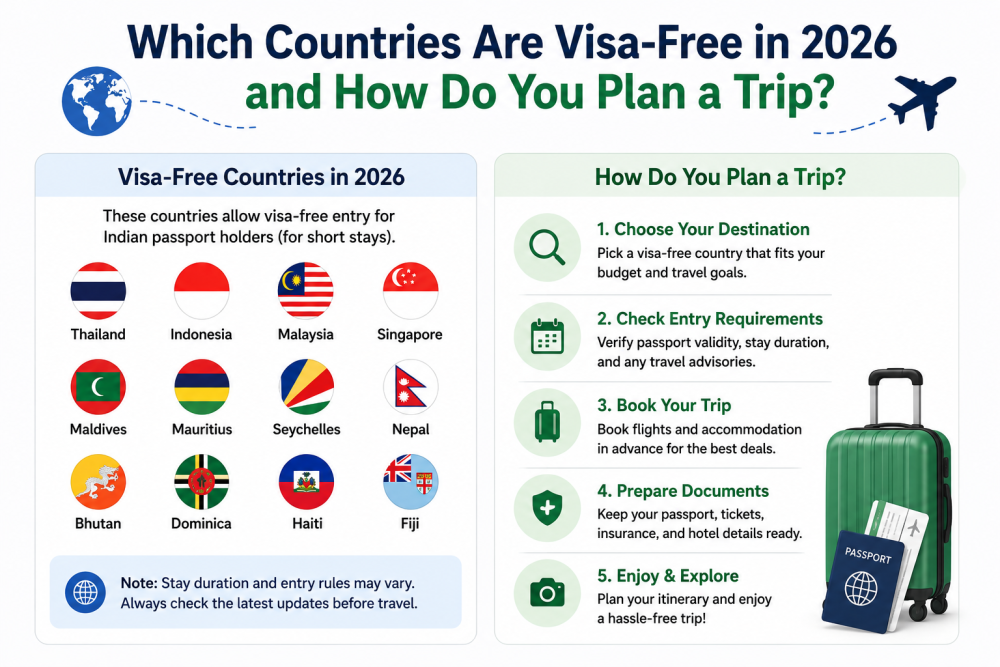
Let me answer the question behind the question first. If you hold a passport from the US, Canada, the UK, or one of the stronger Gulf states like the UAE, you can enter somewhere between 140 and 190 destinations without arranging a visa beforehand. Your problem in 2026 isn't access. Your problem is that "visa-free" has quietly become three different things, the rules shift constantly, and one wrong assumption at a check-in desk can end a trip before the plane boards.
So this article does two jobs. First, the lay of the land: what visa-free actually means now, the new electronic permission systems changing travel this year, and the standout destinations for each passport our readers carry. Second, the planning method, the exact checks to run before booking anything, because I have watched a grown man argue with a gate agent about a rule that changed four months earlier, and he lost, because the gate agent always wins.
One promise I won't make: that every detail below still holds on the day you fly. Visa policy moves faster than any article. Treat this as your map, and verify the final step against official sources, I'll tell you which ones, before you pay for flights.
"Visa-Free" Is Three Different Things Now
Time to clean up some vocabulary, because the differences bite.
Actual visa-free: show up with your passport, get stamped in, done. Most of Europe for Americans, Mexico for Canadians, Japan for Brits, that flavor.
Visa on arrival: you'll get in, but there's a desk, a form, a fee, and sometimes a memorable queue between you and the country. Indonesia does this. Functionally fine, just bring cash and patience.
And the fast-growing third category, electronic travel authorizations, ETAs, where "no visa needed" comes with an asterisk that says "but register online first." The UK now requires its ETA from visa-exempt visitors, including Americans, Canadians, and Gulf nationals, a few pounds, apply online, usually approved fast. The US has long done the same to visa-waiver travelers through ESTA. And the big one: Europe's ETIAS, the authorization system for visa-exempt visitors to the Schengen area, has been slouching toward launch for years and is slated to switch on in late 2026, after Europe's new entry-exit border system finishes rolling out. When it arrives, the "just show up" era for Europe ends, replaced by a cheap online form. Not a visa. Still mandatory once live.
The practical takeaway: "visa-free" in 2026 increasingly means "no embassy, but homework." Budget ten minutes of forms into every international trip and you'll rarely be surprised.
What Each Passport Unlocks
Now the fun part, by audience.
American, Canadian, and British passports travel on roughly the same rails: most of Europe visa-free for 90 days in any 180 within Schengen, plus the UK giving visitors a generous six months. Japan, 90 days. South Korea and Taiwan, similar territory, though Korea toggles its K-ETA requirement, one to check late. Mexico, six months. Most of Latin America, the Caribbean, Georgia, Albania, the Balkans, all straightforward. Thailand's visa exemption stretched to 60 days recently. The gaps in these passports are places like China, Russia, and much of Africa, where proper visas or eVisas still apply, though even China has been experimenting with visa-free windows for some nationalities, another one to verify fresh.
Gulf passports split by country. The UAE passport is genuinely one of the strongest on earth, Schengen visa-free, UK with an ETA, Japan, and a list rivaling the Western passports. Saudi, Qatari, Kuwaiti, Bahraini, and Omani passports carry strong regional and Asian access with more variance on Europe, where Schengen visas may still apply depending on the passport. If you're a Gulf-based expat rather than a citizen, remember the rule that trips people constantly: your visa needs follow your passport, not your residence, though some destinations do offer easier terms for holders of valid GCC residence permits, always confirmed against your specific nationality.
Two destinations deserve a special shout for nearly everyone reading. Georgia hands most of our readers' nationalities a full year visa-free, which is why every travel writer I know keeps ending up in Tbilisi. And Albania offers Americans an unusual one-year stay while most others get the standard 90 days, one of those quirks that makes it a remote-work favorite.
The Pre-Booking Ritual, Five Checks
Here's the method, and I'd genuinely run it before paying for any international flight. Takes fifteen minutes.
Check your destination's official source, the embassy site or government immigration portal, for your exact passport. Not a blog, not a two-year-old forum thread, and not, with respect, even this article, we're your starting point, they're your confirmation. Airlines themselves rely on the IATA Travel Centre database, which is as close to the source of truth as travelers get, if the airline's system says you need a document, you need it.
Check your passport's expiry. The six-month validity rule, your passport must be valid six months beyond your trip in many countries, kills more journeys than any visa policy. While you're there, count blank pages if you're a frequent traveler, some countries demand a full empty page for their stamp.
Check for ETA-type requirements, the UK's, ESTA for the US, whether ETIAS has gone live for Europe by your travel date, Korea's K-ETA status. These are cheap and fast but not optional, and airlines check at the desk.
Check the onward-ticket rule. Plenty of visa-free entries technically require proof you're leaving, and while enforcement is patchy, check-in staff can and do ask. A refundable or cheap onward booking settles it.
And check entry conditions beyond the visa: proof of funds and accommodation occasionally requested, travel insurance mandatory in a few places, and any health requirements for your route. Boring list. Beats being the person crying at the transfer desk.
Planning the Trip Itself, the Visa-Smart Way
A few habits that turn visa knowledge into better trips.
Build itineraries inside one rule zone. The Schengen area's 90-in-180 clock covers most of Europe as a single pool, so a three-month Europe summer is fine, but popping "out and back in" doesn't reset anything, the calendar math follows you. Conversely, the Balkans sit mostly outside Schengen, which is why long-term travelers ping-pong between Schengen and Albania, Georgia, or Turkey, extending Europe indefinitely without breaking rules.
Book flights only after the ritual above, and screenshot every approval, ETAs, eVisas, entry stamps if you're doing multi-entry math. Phone dies, wifi fails, screenshots endure.
Give layovers their own check. Transit through some countries requires its own authorization even if you never leave the airport, transiting the US being the classic example where ESTA applies. A cheap flight with a surprise transit requirement is not a cheap flight.
And for the spontaneous among us, keep a mental shortlist of true walk-in destinations for your passport, the places where the answer is always yes. For most of our readers, that list includes Georgia, Albania, Mexico, much of Southeast Asia and Latin America. When the itch strikes on a Thursday, that's where Friday flights go.
The Bottom Line
For holders of US, UK, Canadian, and strong Gulf passports, 2026 is a golden age of access wearing a bureaucratic disguise: well over a hundred destinations open without a visa, but the definition of "open" now ranges from a simple stamp to an arrival fee to a mandatory online form, with Europe's ETIAS poised to add the biggest form of all late in the year. The travelers who glide through are simply the ones who spent fifteen minutes on the ritual: official source, passport validity, ETA check, onward ticket, entry conditions.
Do the homework, screenshot the approvals, and the world in 2026 is astonishingly available. Skip it, and somewhere a gate agent is waiting to teach you the lesson at the worst possible price.
FAQs: Visa-Free Travel in 2026
How many countries can I visit visa-free with a US, UK, or Canadian passport?
All three passports open roughly 180-plus destinations when you count visa-free entry and visa on arrival together, covering most of Europe, the Americas, and large parts of Asia. The exact count shifts monthly as policies change, which is why checking your specific destination close to travel matters more than the headline number.
What is ETIAS and do I need it in 2026?
ETIAS is Europe's electronic travel authorization for visitors who don't need a Schengen visa, a short online application with a small fee, planned to go live in late 2026 after the EU's new automated border system rolls out. Whether you need it depends on your exact travel dates, so check the official EU ETIAS site when booking; once it's active, visa-exempt travelers, including Americans, Brits, Canadians, and UAE citizens, will need the approval before boarding.
What's the difference between visa-free and visa on arrival?
Visa-free means you're stamped in with just your passport. Visa on arrival means you'll be admitted but must complete a form and usually pay a fee at the border first. Both beat embassy visas, but visa on arrival adds a queue and sometimes a cash-only payment, so know which one your destination uses before landing.
Which countries give the longest visa-free stays?
Georgia is the standout, granting many nationalities a full year. Albania gives US passport holders a year while most others get 90 days. The UK allows visitors six months, Mexico up to 180 days, and the Schengen area works as a combined 90-days-in-any-180 pool across most of Europe.
Do I really need an onward ticket for visa-free entry?
Many countries technically require proof of onward travel, and while border officers ask inconsistently, airline check-in staff enforce it more often because the airline pays if you're refused entry. A cheap or refundable onward booking removes the risk entirely, which is a small price against being denied boarding.
Where should I check visa rules before booking?
Two sources beat everything: the official embassy or immigration website of your destination for your exact nationality, and the IATA Travel Centre database, which is what airlines themselves consult at check-in. Blogs and articles, this one included, are for orientation; those two are for decisions, checked once when booking and once more in the week before you fly.