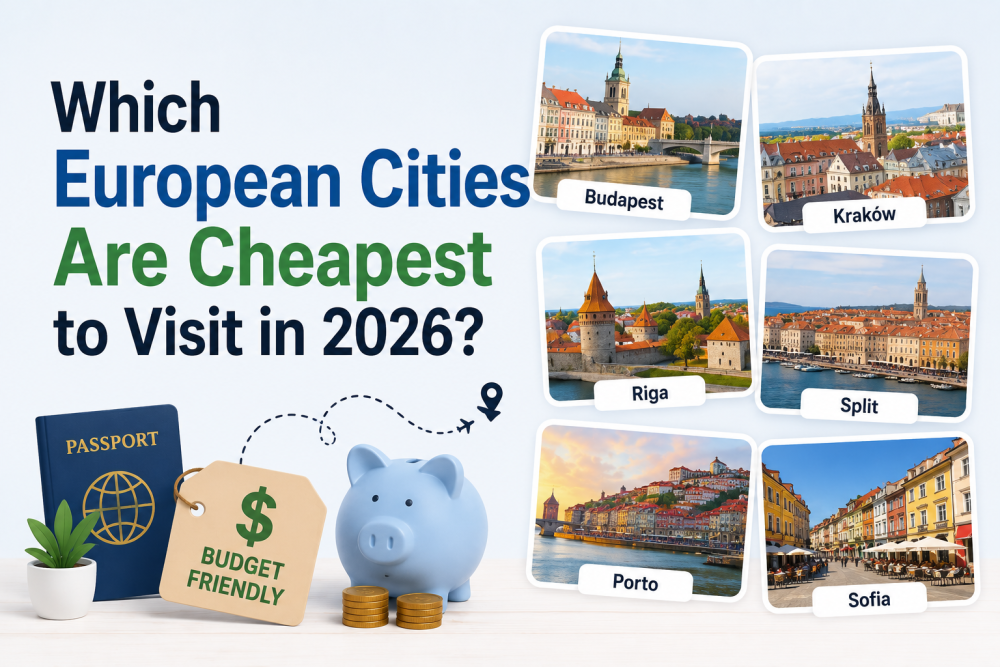
A great European city break has a secret: the product is nearly identical everywhere, old town, café culture, museums, viewpoints, long dinners, and the price varies by a factor of three depending on which old town you picked. Vienna and Belgrade both sell you cobblestones and coffee. One of them charges triple, and the coffee is not three times better.
So here are the cheapest cities where the city-break product is genuinely excellent, ranked in tiers with honest daily budgets, comfortable-scrappy style, decent central bed, local meals, transport, sights, per person, and framed for city trips year-round, our summer destinations guide covers the beach-and-region version, and this is its urban sibling: the long weekends and week-long wanders where the money goes furthest per cathedral.
The Balkan Tier: Europe's Best City Value, Full Stop
Sarajevo is the value champion of the continent and it isn't particularly close: 35 to 50 euros a day buys the layered old town where Ottoman lanes hand you to Austro-Hungarian boulevards mid-street, the sobering and essential war history, coffee culture that treats hurry as a character flaw, and čevapi dinners priced like a rounding error. Add that it's refreshingly untouristed and the honest note that it's the least connected city on this list, flights are improving, buses from Croatia fill the gaps, and it's the single best answer to "where's cheap and actually wonderful."
Belgrade runs the best-nightlife-per-euro operation in Europe, 40 to 55 euros a day, river-barge clubs, a fortress over two rivers, brutal and fascinating history, and a café scene that never got the memo about prices. Skopje, 35 to 50, is the strangest capital on the continent, the statue program has to be seen, with Ottoman bazaar authenticity next door and Lake Ohrid a cheap bus away, per the destinations guide. And Tirana, 35 to 50, is colorful, chaotic, improving monthly, and the natural city anchor for the Albanian trip everyone's planning before prices finish rising.
The Eastern Classics: Polish and Hungarian Gold
Kraków remains the best-known bargain in Europe for a reason: a genuinely top-five-on-the-continent old town, the castle, the Jewish quarter's bars and food trucks, day trips that matter, Auschwitz, the salt mine, at 45 to 60 euros a day, with milk-bar lunches still costing pocket change. It's popular, it absorbs the crowds better than most, and it converts first-time visitors into evangelists at a rate no tourism board could buy. Gdańsk, same budget, gives the Baltic-amber-and-rebuilt-beauty version with a fraction of the visitors.
Budapest holds the 45-to-60 band for the thermal-baths-and-ruin-bars city break that has no equivalent anywhere, with the honest caveat that the tourist core's prices have crept, the trick is eating and drinking two streets behind the river panorama, where Hungary's real price level resumes. Bucharest, 40 to 55, is the underrated one: enormous, strange, energetic, with the palace of the dictator and a old-town bar scene priced for locals, and Sofia plus Plovdiv, 35 to 50, complete the tier, Plovdiv especially, the Roman-theater-and-galleries town our destinations guide flags as deserving far more fame.
The Sleepers and the Western Value Picks
Vilnius is the quiet overachiever: a baroque old town among Europe's largest, the self-declared republic of artists across the river, forest walks inside city limits, at 45 to 60 euros a day, and almost nobody's on the flight. The Baltics generally reward the curious, and Vilnius is their value peak.
West of the old line, where "cheap" is relative but real: Porto, 60 to 80, delivers the tiled, riverside, port-cellared city break that costs half of what the same postcard runs in the famous capitals, and remains western Europe's best value city. Naples, same band, is Italy at Italian prices rather than tourist ones, the best pizza on earth for single-digit euros, chaos included free, with Pompeii next door. Athens, 55 to 75, pairs the Acropolis with a street-food-and-neighborhoods scene that stayed honest through the tourism boom. And Valencia, 60 to 80, is the Spanish city break with beaches attached, everything Barcelona sells, fewer pickpockets, softer bills.
And Istanbul, the special mention that half-belongs to another continent and fully belongs on this list: the currency situation has kept it extraordinary value for euro-and-dollar visitors, 40 to 60 euros a day for one of the great cities of human history, mosques, bazaars, ferries between continents at bus-ticket prices, with the note that hotel prices in the tourist core run hotter than street level, book smart, eat like a local, and it's the most city per euro on offer anywhere.
Making Any of Them Cheaper
The city-break craft, compressed from our travel guides. Fly by the fare map: these cities are exactly where the flights guide's flexibility levers pay, let the cheap fare pick between Kraków and Budapest, the trip is excellent either way. Sleep central and modest: the location-over-amenities rule from the solo guide applies to city breaks doubly, the walkable bed beats the fancy far one, and these cities' central private rooms and apartments cost what hostel dorms cost out west. Eat on the lunch rhythm: the menu-of-the-day across this entire list is the continent's best food deal, and dinner two streets off the main square costs half, everywhere, always. Move overland between them: the bus-and-cheap-train stack from our transport guide chains these cities beautifully, Kraków-Budapest, Belgrade-Sarajevo, Sofia-Plovdiv-Bucharest are classic budget corridors. And go shoulder or winter: city breaks, unlike beach trips, work year-round, and these old towns in December cost even less and photograph better under lights.
The Bottom Line
The cheapest European cities worth your 2026: Sarajevo leading the Balkan tier with Belgrade, Skopje, and Tirana behind, 35 to 55 euros a day, Kraków and Budapest heading the eastern classics with Bucharest, Sofia, and Plovdiv, 40 to 60, Vilnius as the Baltic sleeper, and Porto, Naples, Athens, and Valencia carrying the western value flag at 55 to 80, with Istanbul delivering the most history per euro on the continent's edge. Every one of them sells the full city-break product, the old town, the cafés, the long dinners, at a half to a third of the famous capitals' prices.
Let the fare pick the city, sleep central, eat one street back, and the European city break returns to what it was always supposed to be: a lot of civilization for not much money, with change left over for the next one.
FAQs: Cheap European City Breaks
What is the cheapest city in Europe to visit right now?
Sarajevo, all things weighed: 35 to 50 euros a day for a genuinely captivating city break, with Skopje and Tirana at the same level and Belgrade just above. Among the famous names, Kraków delivers the best combination of renown and price at 45 to 60 euros a day.
How much does a cheap European city break cost per day?
In the Balkan tier, 35 to 55 euros a day covers a central bed, local meals, transport, and sights; the eastern classics run 40 to 60; and the western value picks, Porto, Naples, Athens, Valencia, land at 55 to 80. The famous capitals easily double any of those numbers for the same cobblestones-and-coffee product.
Is Prague still cheap to visit?
It's mid-priced now rather than cheap, years of popularity moved its tourist core toward western prices, which is why it's absent from this list's tiers. The value successors are Kraków, which delivers a comparable old-town wow at friendlier prices, and Budapest, where stepping two streets off the river restores Hungarian price levels.
What's the cheapest way to visit multiple cheap cities in one trip?
Chain them overland: the classic budget corridors, Kraków to Budapest, Belgrade to Sarajevo, Sofia to Plovdiv to Bucharest, run on cheap buses and regional trains per our Europe transport guide, with one budget flight for any long jump. Two or three cities a week is the comfortable pace; more turns the trip into logistics.
Are these cheap cities safe for tourists?
By European and global standards, yes, the realistic issues across this list are pickpockets in crowded spots and occasional taxi creativity, answered by ride apps and ordinary city habits. The Balkan capitals in particular surprise first-timers with how relaxed they feel, and solo travelers, per our solo guide's playbook, report these routes as comfortable and well-trodden.
When is the cheapest time for a European city break?
Outside the beach calendar entirely: city breaks work year-round, and November through March, minus the Christmas-market weeks, delivers the same old towns at the year's lowest bed prices, with shoulder months, April-May, late September-October, as the weather-price sweet spot. These cities' indoor cultures, the cafés, baths, museums, and bars, are half the product anyway, and winter suits them.